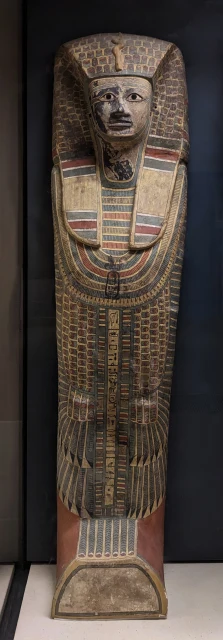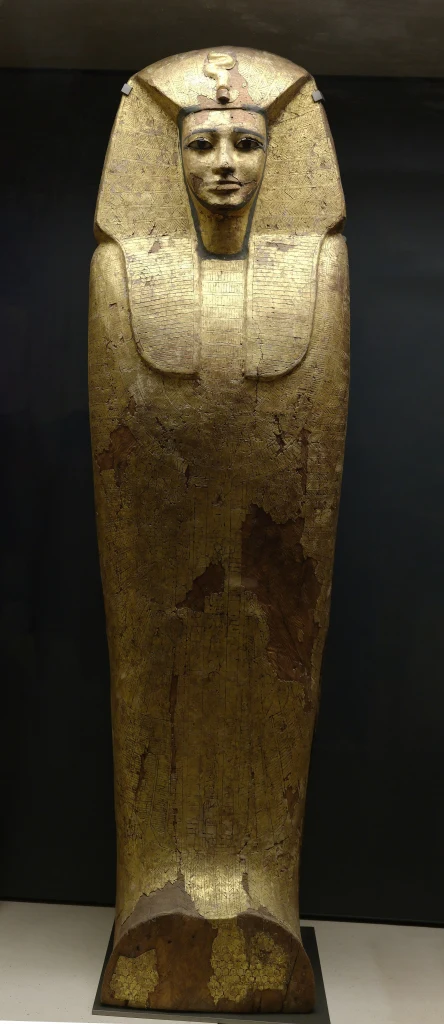
Coffin of King Sekhemre-Wepmaat Intef
Details
The story
Around 1110 BC, under Ramesses IX, rumours of tomb robbery on the west bank at Thebes led to an official inspection of the old royal burials. The report, now known as the Abbott Papyrus, lists the tomb of this king, Sekhemre-Wepmaat Intef, and records that the inspectors found it intact. He had ruled at Thebes in the 17th Dynasty, when the north of Egypt was in the hands of the Hyksos, rulers of foreign origin.
The coffin is of the type Egyptologists call rishi, from the Arabic for feathered, because a pattern of wings wraps the body. Here the lid is gilded. Its inscription calls the coffin a gift from his brother, King Intef, which is how we know that Nubkheperre Intef buried him and took the throne after him.
It was found at Dra Abu el-Naga, in the Theban hills, in the 19th century, probably around 1843.