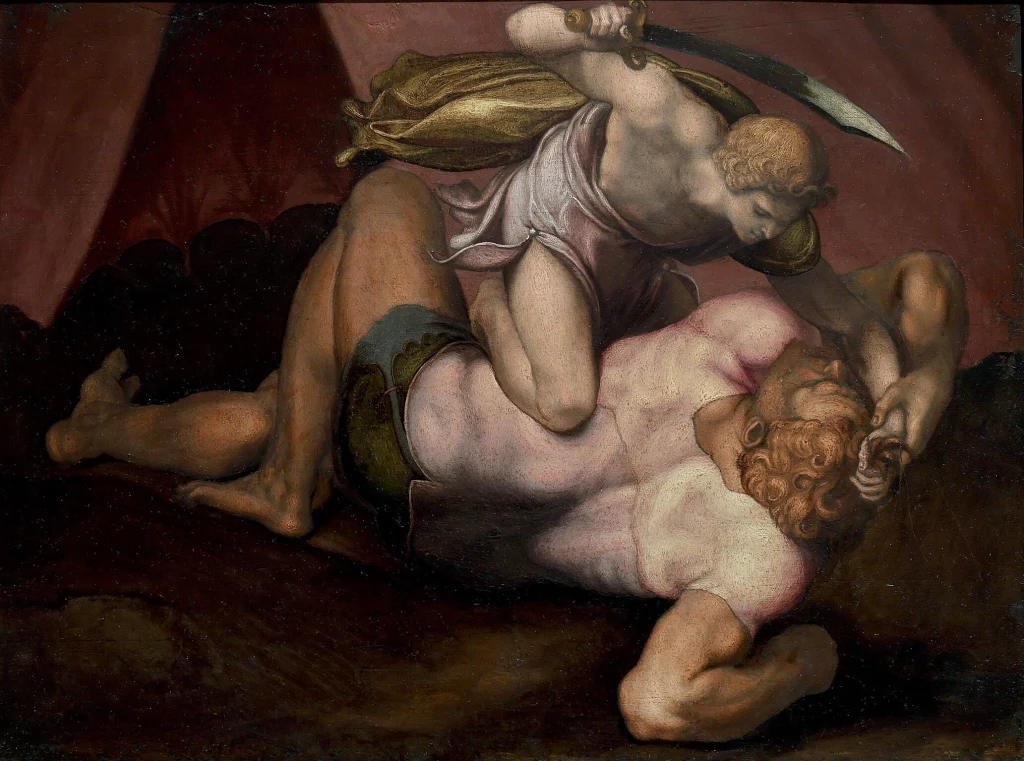
David and Goliath
Details
The story
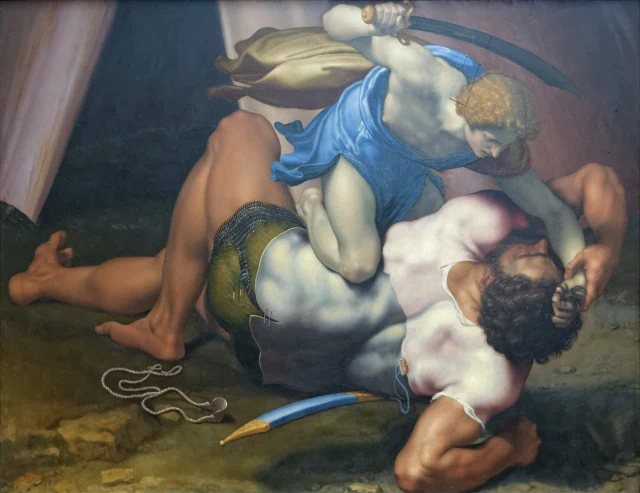
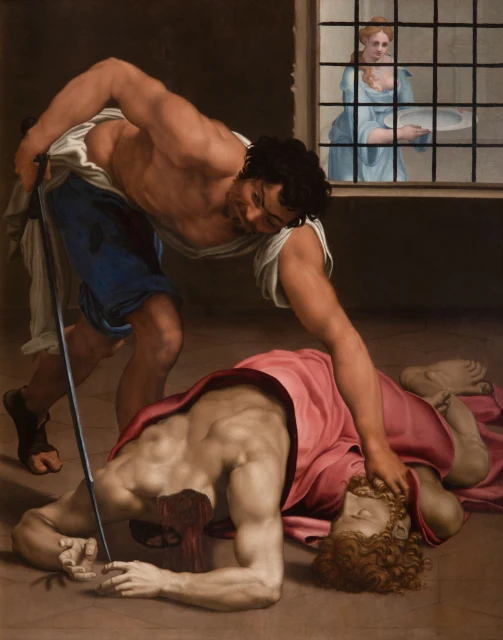
When the Italian state bought this small picture in 1918, it was catalogued as a wooden panel by Lelio Orsi, a painter from Emilia, and for decades hardly anyone studied it. A study published in 2014 recognised it as the work of Daniele da Volterra, painted in oil on a slab of slate. The back gave it away. It bears the coat of arms of Gaspar de Haro, Marquis del Carpio, Spanish ambassador in Rome and later viceroy of Naples, with the number 1305. His Roman inventory of 1682 describes a slate painted on both sides with David cutting off Goliath's head, credited to Michelangelo and said to have served as the first model for the large version in the Villa Montalto, the slate that is now in the Louvre. In his Naples inventory of 1687 the same work appears as two pictures, numbers 1304 and 1305. The stone had been split, and this is one of its two faces. The museum dates it to about 1550 or 1551, and the same study argues that this smaller slate is the one described by Vasari, the painter and biographer of artists, with the Louvre's larger version made after it.