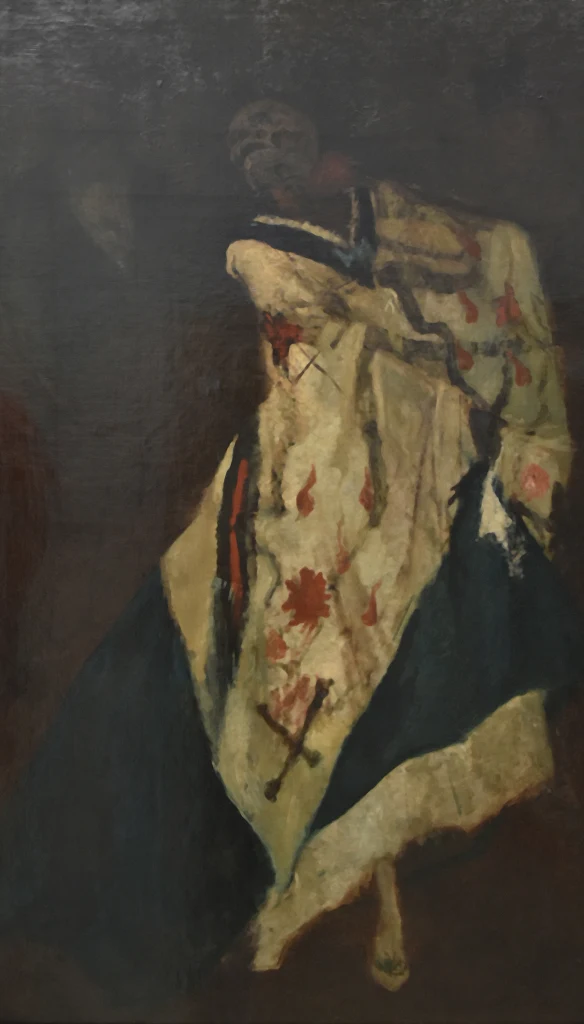
Death at the Ball
Details
The story
In 1859, visitors to the official Salon in Paris stopped in front of a small sculpture by Ernest Christophe: a skeleton posed like a coquette inside a wide crinoline. The poet Charles Baudelaire admired it and wrote it into a poem about death joining the dance. Felicien Rops, a Belgian artist who came under Baudelaire's influence after the two met in Brussels in 1864, took that idea onto canvas.
Here Death has arrived at the ball. A skeleton stands almost life-size in a woman's evening gown, the dark skirt spread over the hooped crinoline that shaped fashionable dress at the time. The pose is not monstrous. The figure holds itself with the composure of a guest waiting to be led onto the floor.
Much of Rops's work turns on this meeting of the elegant and the deathly, the salon and the grave. The bell-shaped crinoline was the fashion of those very years, which is why the gown looks so exactly of its moment.