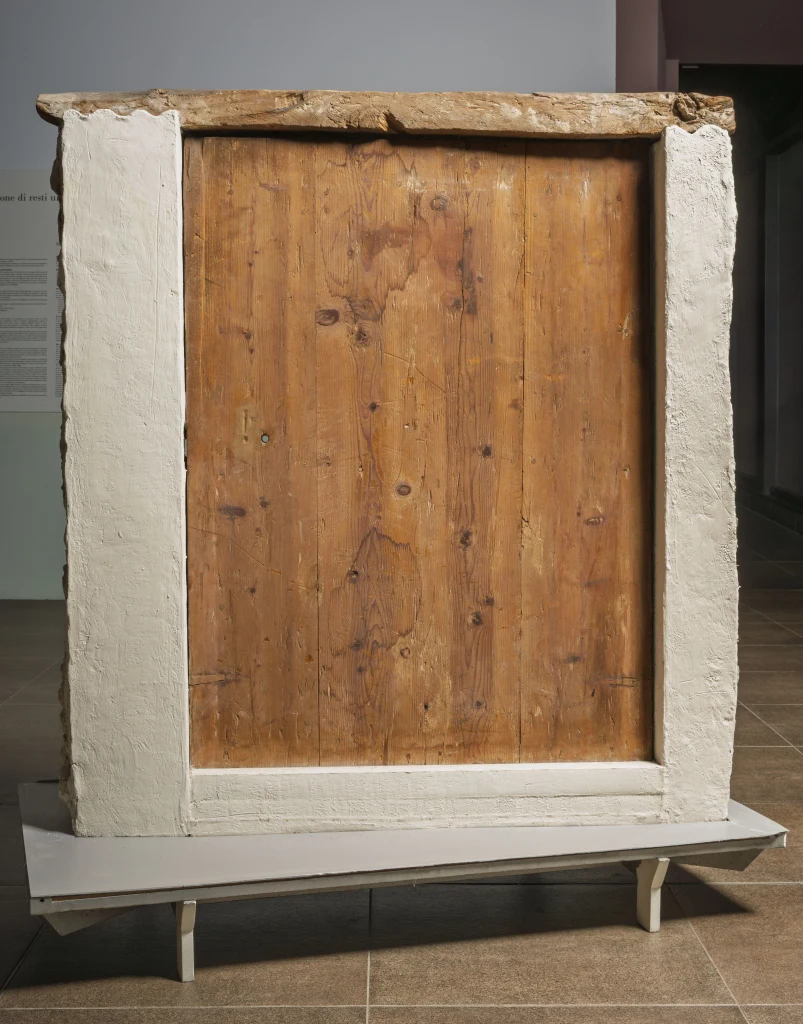
Door of the Burial Chamber of Kha and Merit
Details
The story
In February 1906 the Italian Archaeological Mission, led by Ernesto Schiaparelli, director of the Turin museum, was digging at the foot of the cliffs at Deir el-Medina, the village of the royal tomb builders on the west bank at Thebes. Weeks of work had turned up only tombs that robbers had emptied long before. Then the workmen came upon clean limestone chips, a rough stairway, and a doorway walled up with stones that showed no sign of ever having been reopened.
Arthur Weigall, the British inspector of antiquities, was there when the walls came down. At the end of the second passage stood this door. Weigall wrote that the wood still had the pale colour of fresh timber, that a heavy wooden lock held it shut, and that its bronze handle was tied to a knob in the doorpost and sealed with a dab of stamped clay. It all looked so modern, he said, that Schiaparelli called to his servant for the key, and the man answered quite seriously that he did not know where it was.
Rather than break the door, the team slid a thin saw between the planks and cut the crossbars behind it, so the lock survived. Beyond lay the burial chamber of the foreman Kha and his wife Merit, untouched for more than 3,000 years. The room was recorded, photographed and emptied in about three days, and almost everything in it was awarded to Turin.
More works by Unknown Egyptian artist (18th Dynasty)
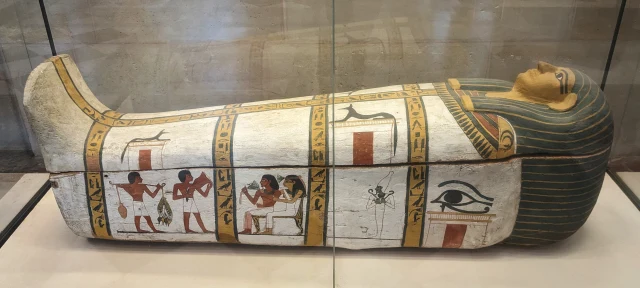 Anthropoid Coffin of MadjaUnknown Egyptian artist (18th Dynasty), -1452
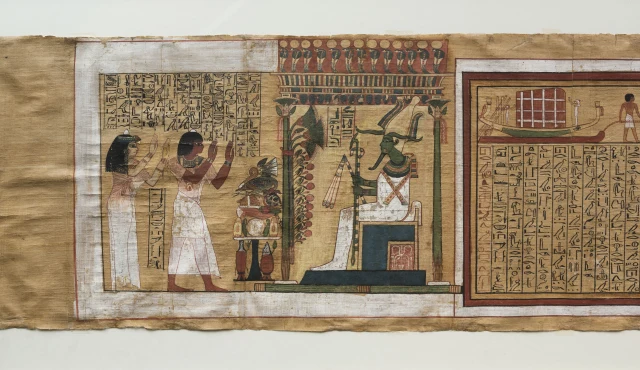 Book of the Dead of KhaUnknown Egyptian artist (18th Dynasty), -1389
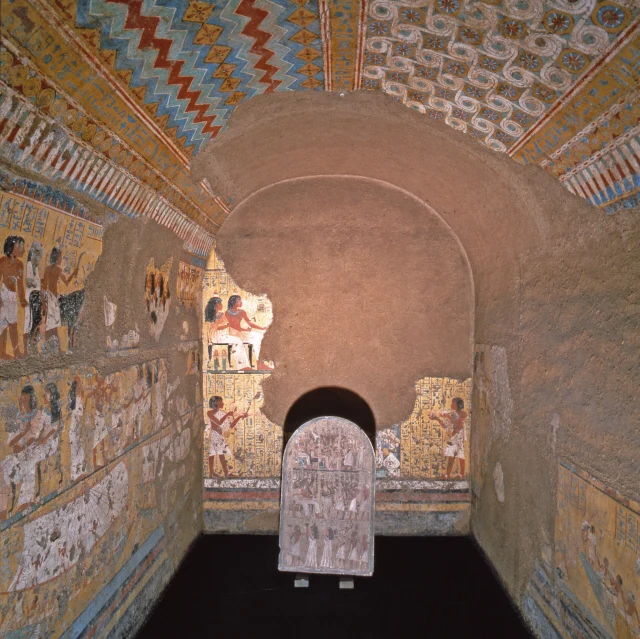 Chapel of MayaUnknown Egyptian artist (18th Dynasty), -1322
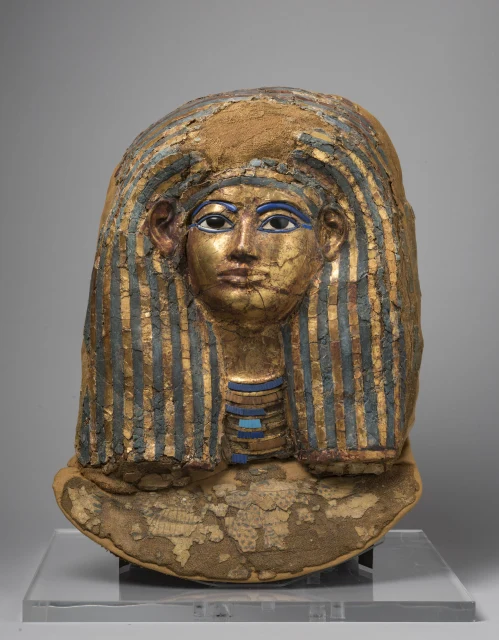 Funerary Mask of MeritUnknown Egyptian artist (18th Dynasty), -1389
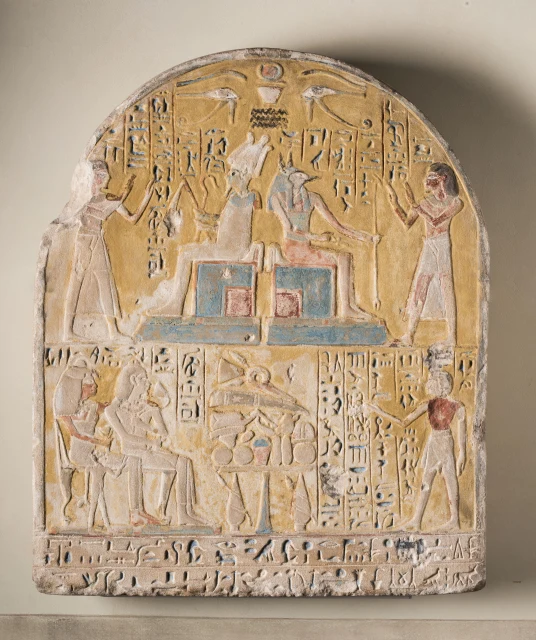 Funerary Stela of KhaUnknown Egyptian artist (18th Dynasty), -1389