Peter Paul Rubens · PD
Fortuna
Details
The story
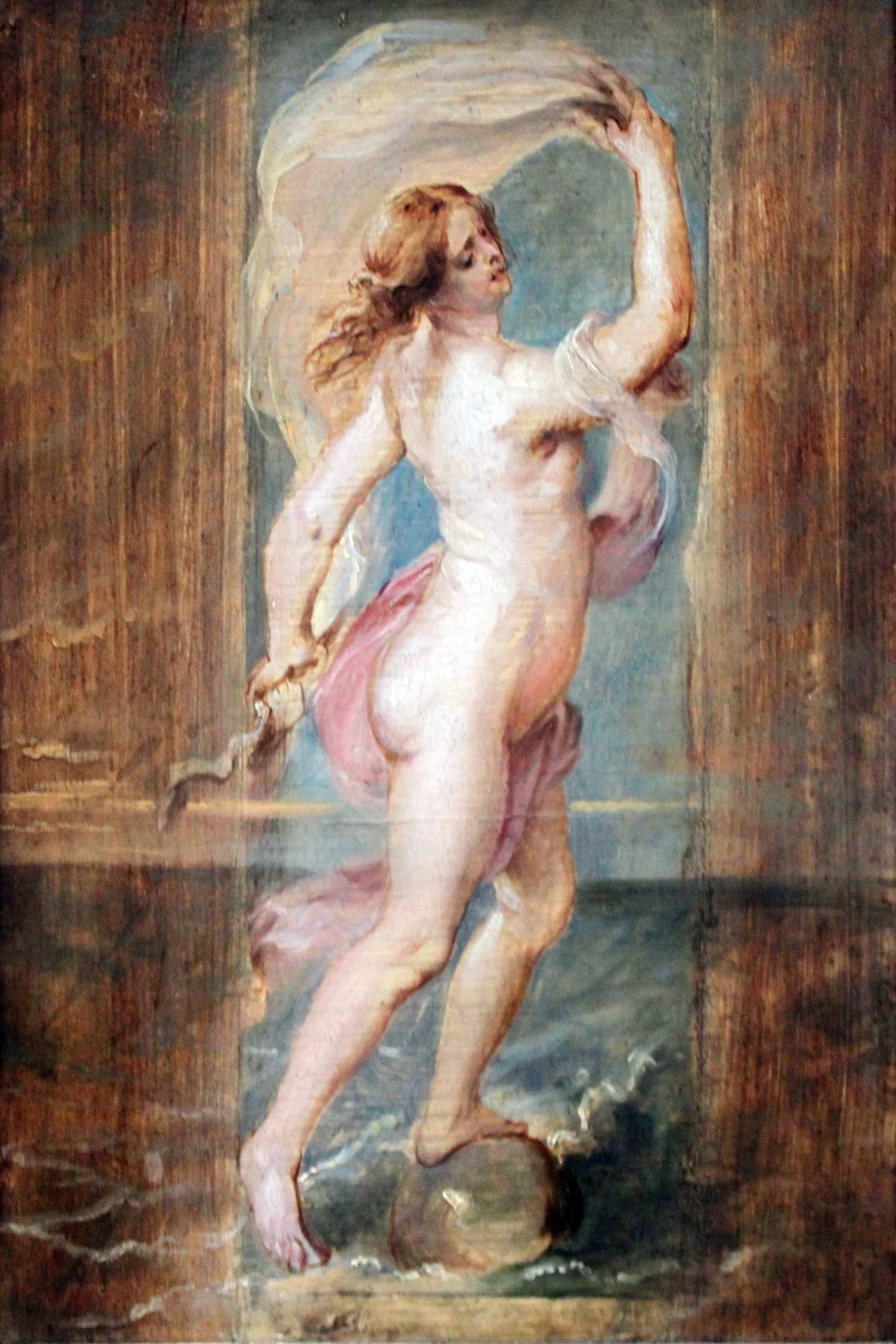
In the autumn of 1636 an aging Rubens took on the largest commission of his life. Philip the Fourth of Spain wanted his hunting lodge outside Madrid, the Torre de la Parada, filled with scenes from Ovid, and well over a hundred canvases were needed quickly. Rubens, by then around 60 and slowed by gout, worked out each idea in a small oil sketch like this one, painted rapidly by his own hand, then passed the panels to assistants who enlarged them to full size. This is his Fortuna, the Roman goddess of luck, nude and airborne, balancing on a sphere that rolls across the water while her hair streams sideways as if chance itself were driving her on. The finished large canvas hangs today in the Prado in Madrid. Rubens died in 1640, only a few years after these panels left his workshop, and the lodge they were made for later burned, so the quick sureness of this little sketch is much of what survives of the whole scheme.