Paul Cézanne · PD
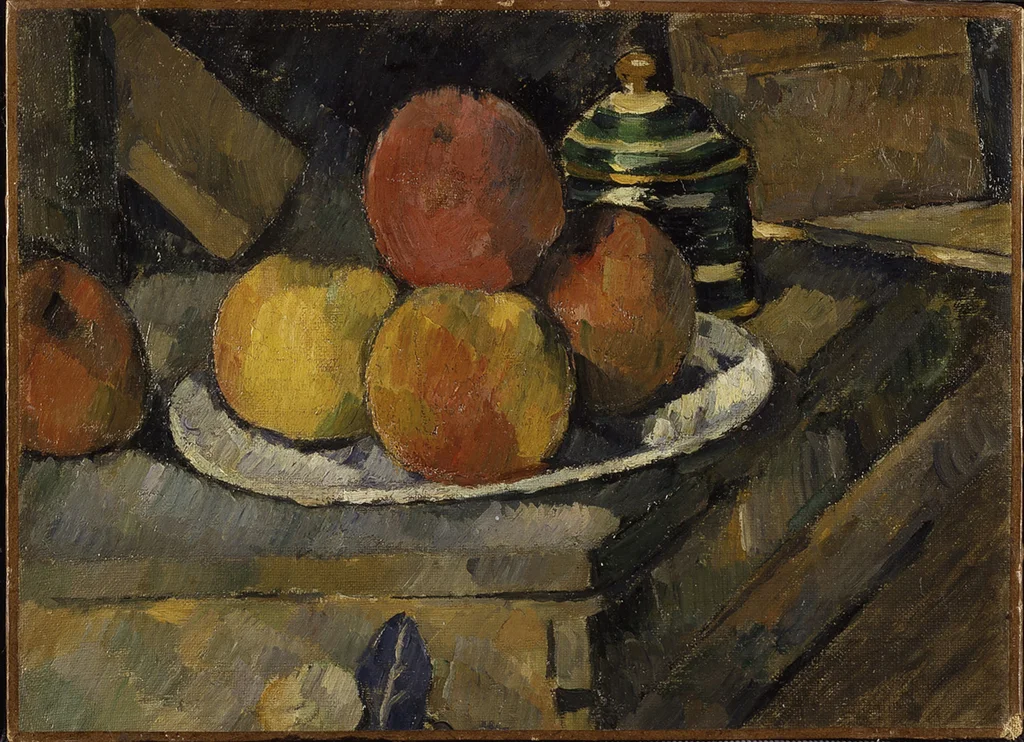
Fruit and Sugar Bowl
Details
The story
The picture is small, 24 by 33 centimetres, and part of it is gone. An apple at the left edge is cut through by the canvas itself, which is why the catalogue raisonné lists it as a fragment of something larger. When the Paris dealer Ambroise Vollard wrote it into his stockbook he simply put down what he saw, four apples on a plate beside a little powder box, and that description became its French title. English catalogues read the same lidded pot as a sugar bowl. Cézanne painted it around 1877, the year he hung 16 works in the third Impressionist exhibition in Paris and drew the sharpest ridicule of the group, after which he stopped showing with them. Vollard sold it in 1899 to Georges Viau, a Paris dentist with a large Impressionist collection, and in April 1910 it went to Sidney Brown, an industrialist in the Swiss town of Baden, whose villa is now the museum that keeps it.