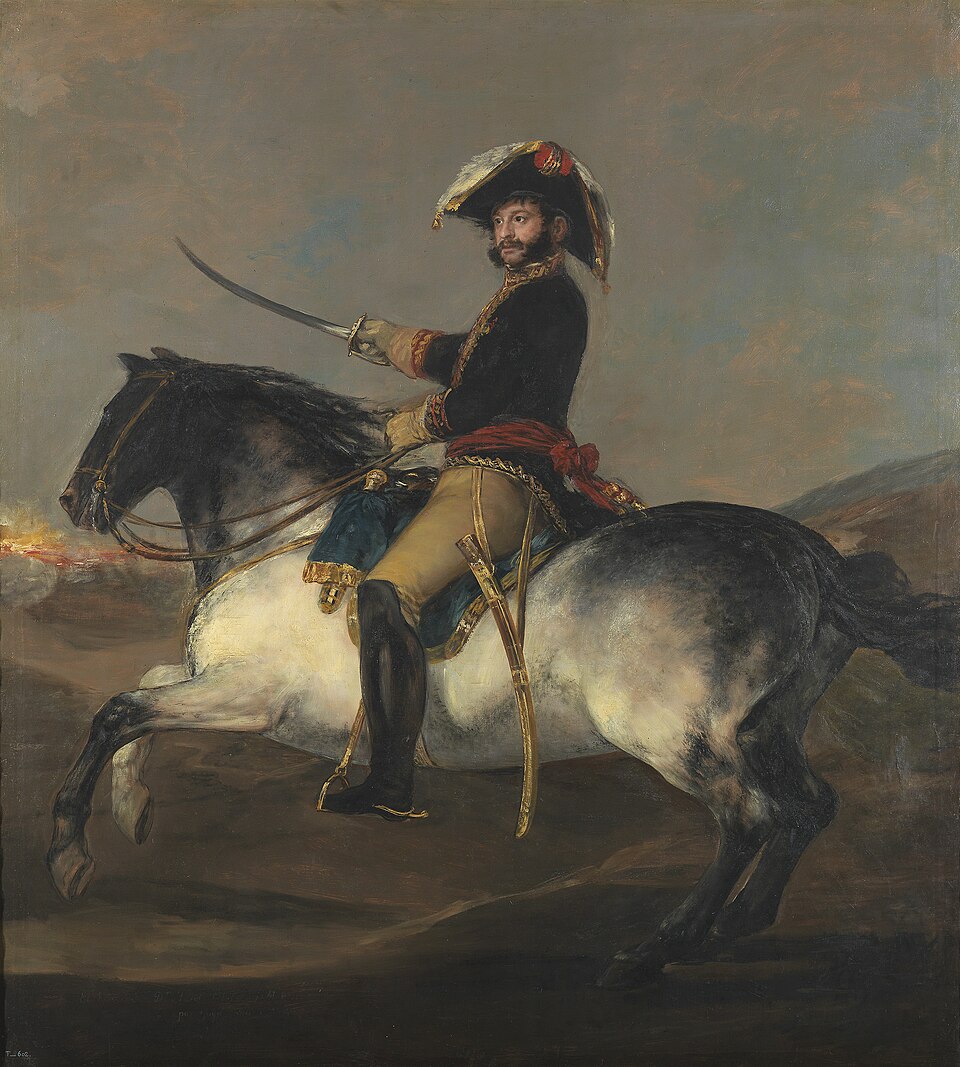
Francisco Goya, General José de Palafox on Horseback, 1814. Wikimedia Commons. · PD
General José de Palafox on Horseback
Details
The story
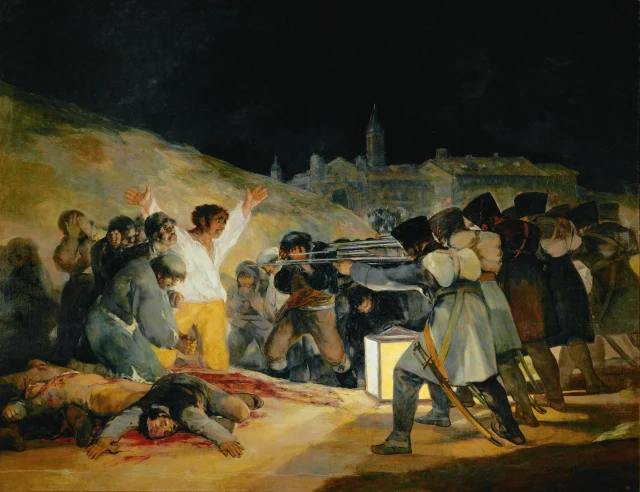
By 1814 the war was over. After six years of fighting the French had been driven out of Spain, and Ferdinand VII was back on the throne. Goya, nearly 70 and long since deaf, spent that year painting the war and its heroes. His two great canvases of the Second and Third of May, 1808 come from these same months. José de Palafox had led the defence of Zaragoza through the brutal sieges of 1808 and 1809, holding out street by street until he was captured and shut away in France. He came home in 1814 a symbol of Spanish resistance and commissioned this portrait himself. Goya sets him on a rearing horse, sabre in hand, the smoking ruins of his city behind. His son later left the picture to the Prado.