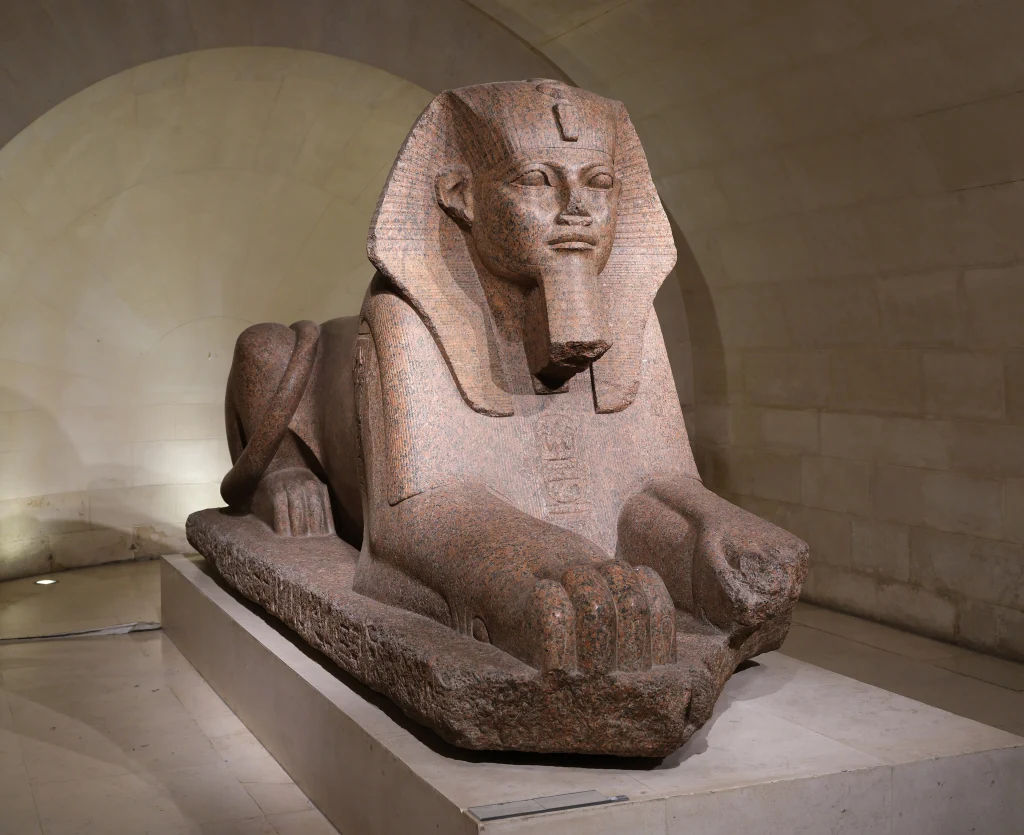
Great Sphinx of Tanis
Details
The story
The Louvre dates this sphinx to the reign of Amenemhat II, around 1900 BC, and adds, with a question mark, that it may be some seven centuries older, from the Fourth Dynasty.
What is certain is that later kings kept claiming it. Its inscriptions carry the names of Merneptah, a son of Ramesses II, and of Shoshenq I, who ruled almost 1,000 years after Amenemhat, and probably also of Apophis, one of the foreign Hyksos kings who held northern Egypt in between.
It was found at Tanis, in the eastern Nile Delta, and came to Paris in 1826, when France bought the collection of Henry Salt, the British consul-general in Egypt, on the advice of Champollion, the decipherer of hieroglyphs. Nearly five metres long and carved in pink granite, it lies today in the vaulted crypt of the Sully wing that is named after it.