Peter Paul Rubens · PD
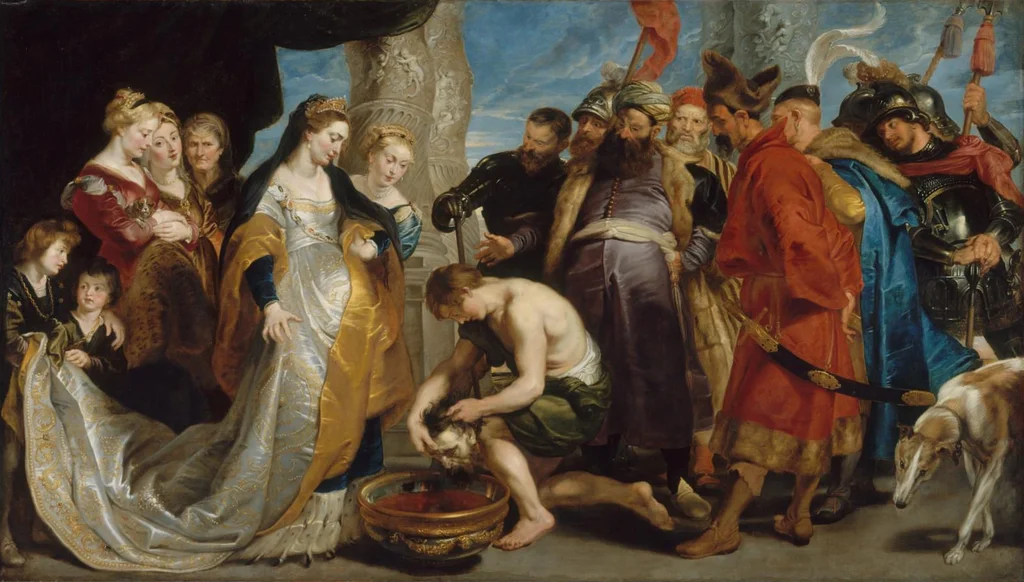
Head of Cyrus Brought to Queen Tomyris
Details
The story
In the early 1620s the Southern Netherlands were governed from Brussels by a woman, the Infanta Isabella, ruling for the Spanish crown, and the pageants staged in her honour liked to set her beside the warrior queens of antiquity. Tomyris was one of them. The Greek historian Herodotus tells how this queen of the Massagetae, a people beyond the Caspian, defeated the Persian king Cyrus and had his severed head pushed into a skin full of blood, in revenge for the son she had lost through his trickery.
The Museum of Fine Arts thinks Isabella may have ordered this canvas, around 1622 or 1623, as an image of just punishment handed out by a virtuous ruler. A dealer's letter of 1643 lists "the head of Cyrus which is being presented to a queen" among six large Rubens paintings just sold from the ducal palace in Brussels. Rubens designed the picture, and his studio assistants painted much of it under his supervision. The two pages at the left were modelled on his own sons.