Peter Paul Rubens · PD
Hercules and Cerberus
Details
The story
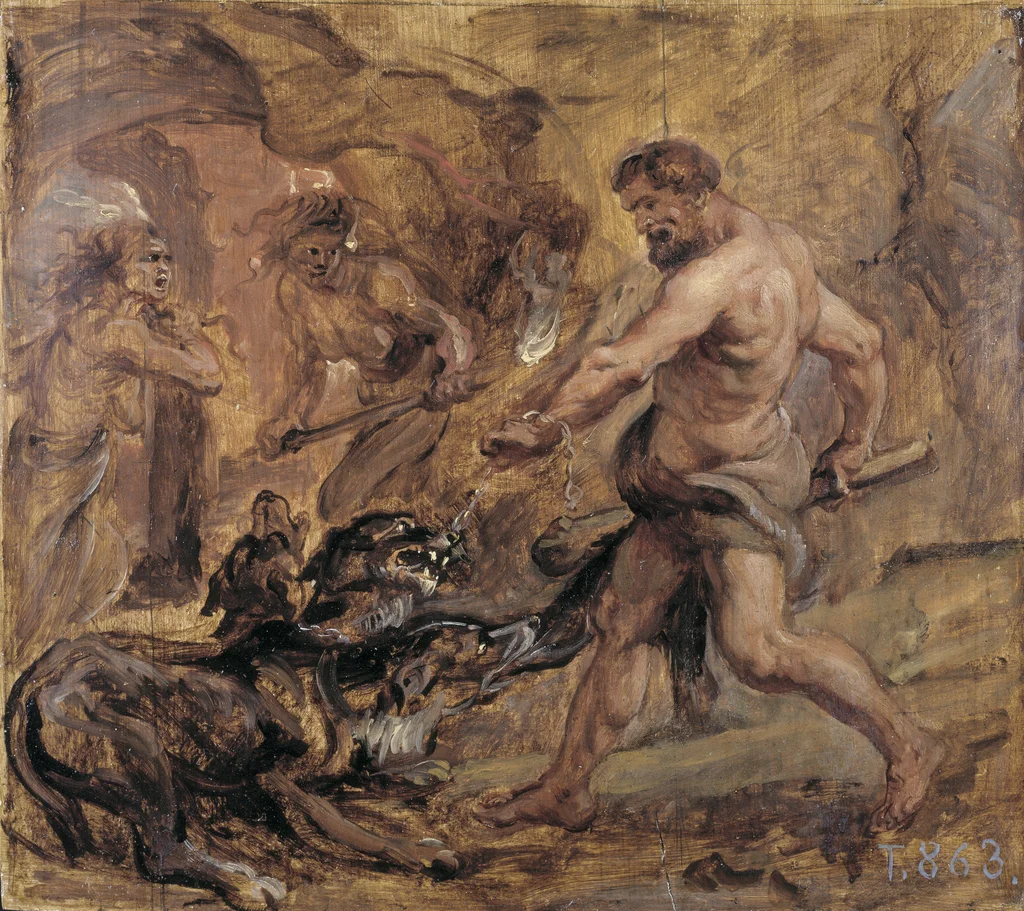
This panel is smaller than a sheet of writing paper, and it is all that is left of the composition. It is one of the sketches Rubens made from 1636 for the Torre de la Parada, Philip IV's hunting lodge in the hills of El Pardo, and the large canvas painted from it has not survived. The scene is the last of the labours, told by Ovid in the seventh book of the Metamorphoses: a dark cave, a sloping path, and Hercules hauling Cerberus up it in chains, the dog twisting its eyes away from the daylight. Two figures watch from the shadows behind, probably Pluto and Proserpina. Julius Held pointed out that Rubens keeps the whole thing in one brown key to give the light of the underworld, and the hero is the only body worked up in full muscle while the others are barely lifted off the wood. The sketch first appears by name in a Spanish dictionary of artists published in 1800, in the collection of the Duke of Infantado, and reached the museum in 1889 as a gift from the widowed Duchess of Pastrana.