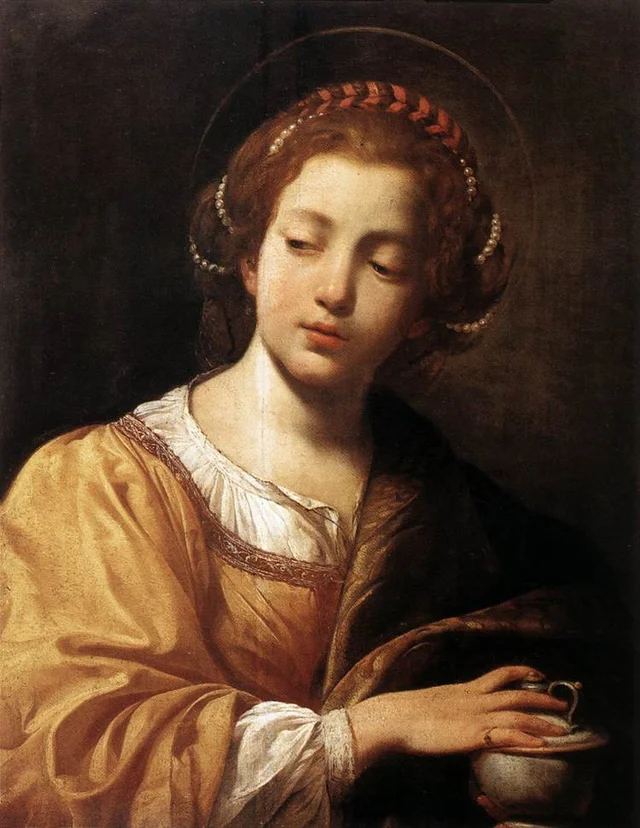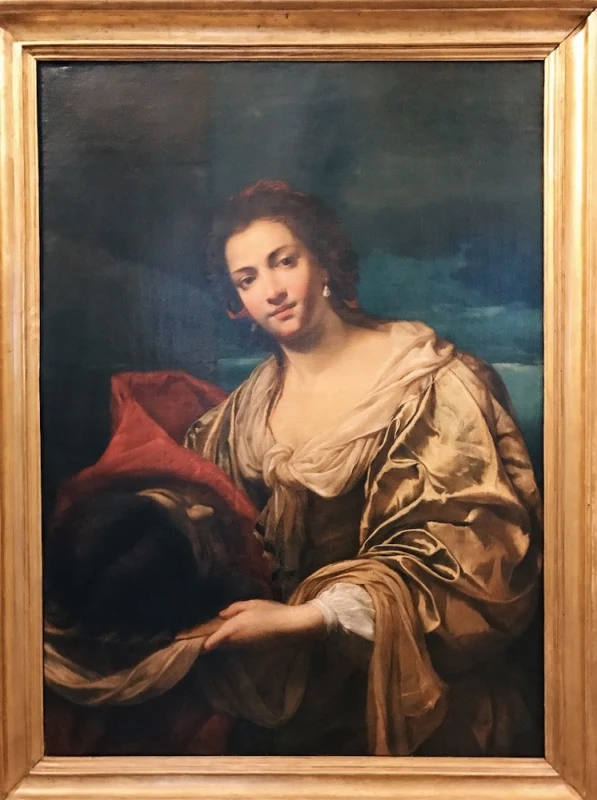
Herodias with the Head of Saint John the Baptist
Details
The story
Neither of the Gospels that tell this story gives the dancing girl a name. Mark and Matthew call her only the daughter of Herodias. Herodias had left her husband for his brother, Herod Antipas, and John the Baptist had said in public that the marriage was unlawful. When the girl's dance pleased Herod so much that he promised her anything, it was her mother who told her what to ask for.
The name Salome comes from another source, the Jewish historian Josephus, and over the centuries Italian painters and inventories often used the two names loosely for a woman with the head on a platter. In this same collection, Guido Reni's picture of the scene is called Salome. Here the museum names the woman Herodias, the one who wanted John dead.
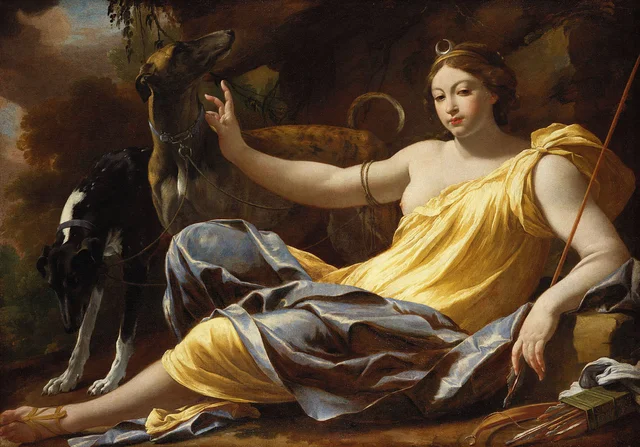
Simon Vouet painted her in Rome, during the long years he spent in the city, and the museum's dates for the canvas run from about 1615 to the mid-1620s. She emerges from the shadow as one of the seductive heroines he painted then, an ideal of womanhood popular in 17th-century Rome, with Caravaggio's hard light filtered and softened. From October 1958 to November 1960 the picture was lent to the Quirinal Palace, the seat of the President of the Italian Republic.