Ierusalymitika
Details
The story
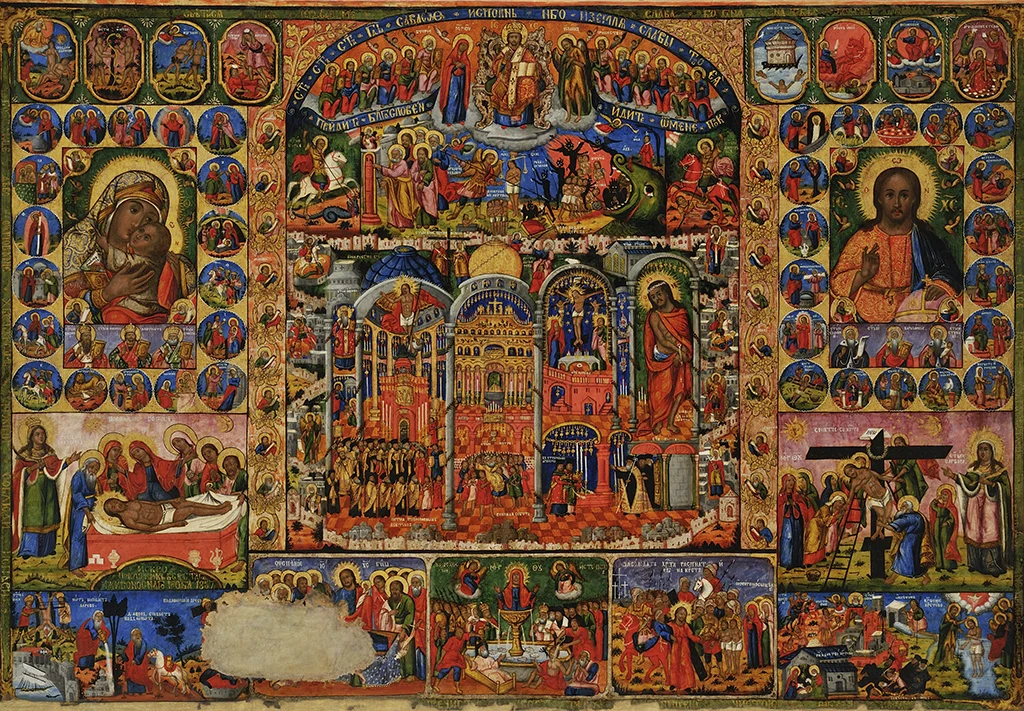
This is less an icon to pray before than a souvenir of a journey, and proof that it was made. Painted on canvas in 1857, it is what Balkan Christians called a proskynetarion, a large cloth map of Jerusalem, with the Church of the Holy Sepulchre set at its centre and the sites of Christ's last days laid out around it. In the 18th and 19th centuries a pilgrimage to Jerusalem, or to Mount Athos, or to the Rila Monastery carried real prestige. Those who made it earned the honoured name of hadzhi, and often paid for a cloth like this to bring home. It hung in the house or was given to the parish church, a way of sharing the journey with everyone who had stayed behind. The whole walled city is shown at once, seen from above and from the side together, so a viewer could trace the route from gate to shrine.