Claude Monet · PD
Jerusalem Artichoke Flowers
Details
The story
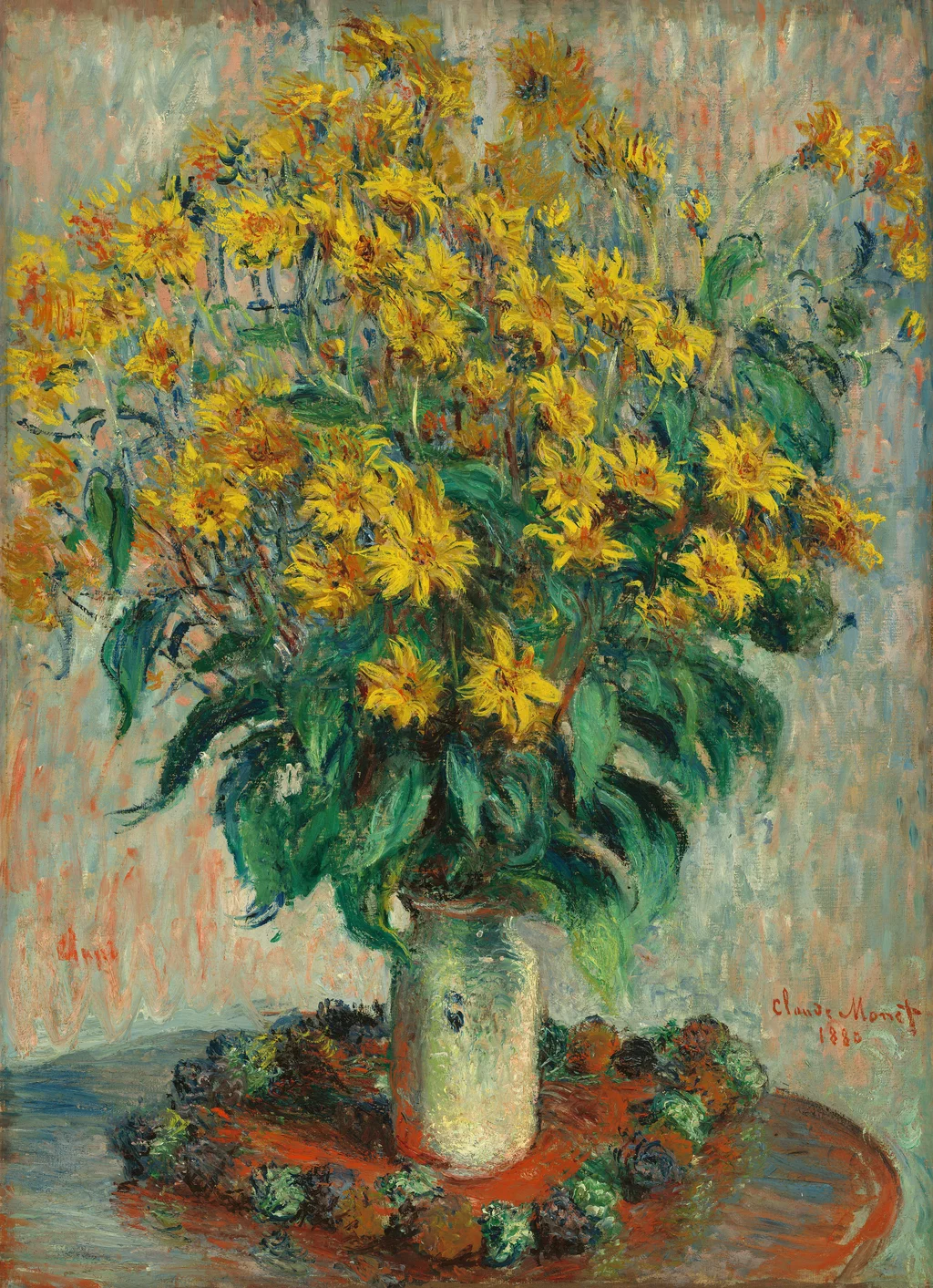
In 1880 Monet broke ranks and sent a canvas to the official Salon, the institution the Impressionists had set themselves against. He was living upriver at Vétheuil and short of money, and the flower pieces belong to the same season of practical decisions. Between 1878 and 1883 he painted about 20 of them, indoor work that buyers took more readily than his river views. The bloom here comes out of the kitchen garden: the topinambour, or Jerusalem artichoke, grown in France for its knobbly tuber, with the tall yellow daisy on top counting for nothing. He cut a bunch and stood them in a plain white vase. In November 1880 the canvas went to a Paris collector named Cahuzac, who lent it back to the Impressionists for their exhibition of 1882, where it hung as Fleurs de topinambour.