Judith
Details
The story
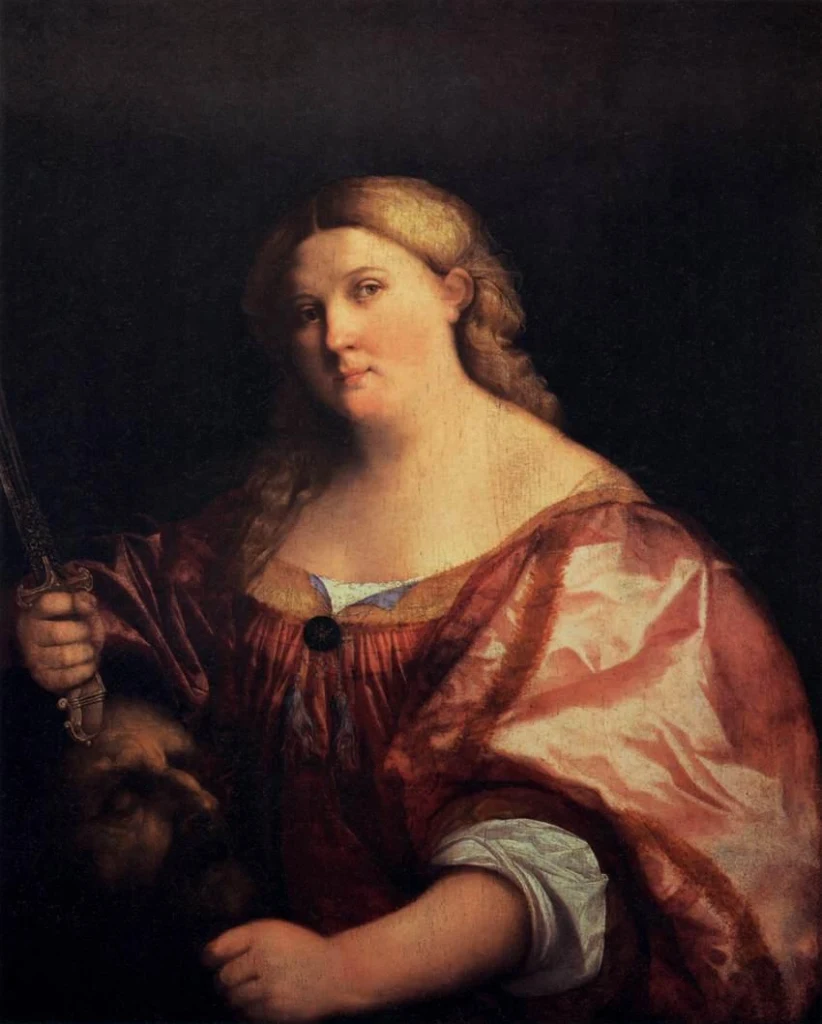
For a long time no one was certain who had painted this Judith. In the collection of the Della Rovere dukes of Urbino it passed under the names of both Titian and Palma Vecchio, and when it reached the Uffizi in 1798 it was catalogued as the work of yet another painter, Pordenone. Only later did scholars settle on Palma, reading it as a mature work from his final years, around 1525 to 1528. The story is the widow Judith, who saved her besieged town by winning the trust of the enemy general Holofernes and then beheading him in his tent. Palma gives her a calm, unhurried beauty, the sword held loosely in one hand and the severed head set at her side, with almost none of the horror the subject invites. That head has suffered over the centuries from harsh cleaning. During the Second World War the panel was moved out of Florence for safety, seized by German troops, and taken north to a castle near Bolzano before it was recovered in 1945.