Fabrizio Garrisi · CC0
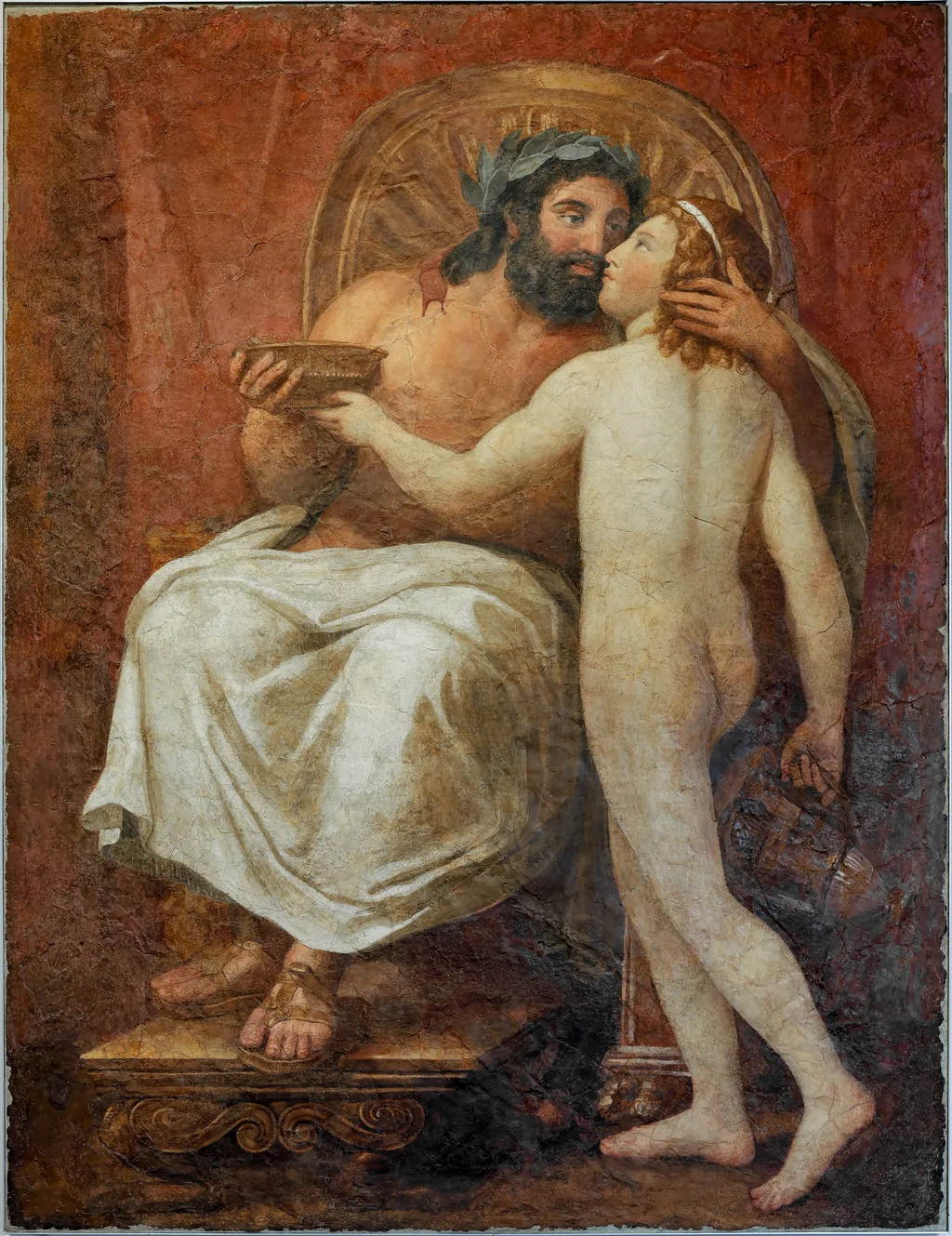
Jupiter and Ganymede
Details
The story
This picture came to light in Rome in 1760, at a moment when the excavations at Herculaneum and Pompeii were the talk of Europe and every newly found ancient wall painting was news. It fooled the man who should have known best. Johann Joachim Winckelmann, the German scholar who led the new passion for Greek and Roman art, wrote in his History of Ancient Art of 1764 that it outshone every painting yet found at Herculaneum. Ganymede, the Trojan shepherd boy whom Jupiter carried off to be his cupbearer, was to him one of the most beautiful figures surviving from antiquity. It was a fake. The museum gives it to Anton Raphael Mengs, Winckelmann's own close friend, or perhaps to his accomplice Giovanni Battista Casanova, a painter and the brother of the famous Giacomo, and reads it as a deliberate trap to discredit the scholar. It was painted as a true fresco on plaster, later transferred to canvas, and bought by the Italian state in 1895.