Didier Descouens · PD
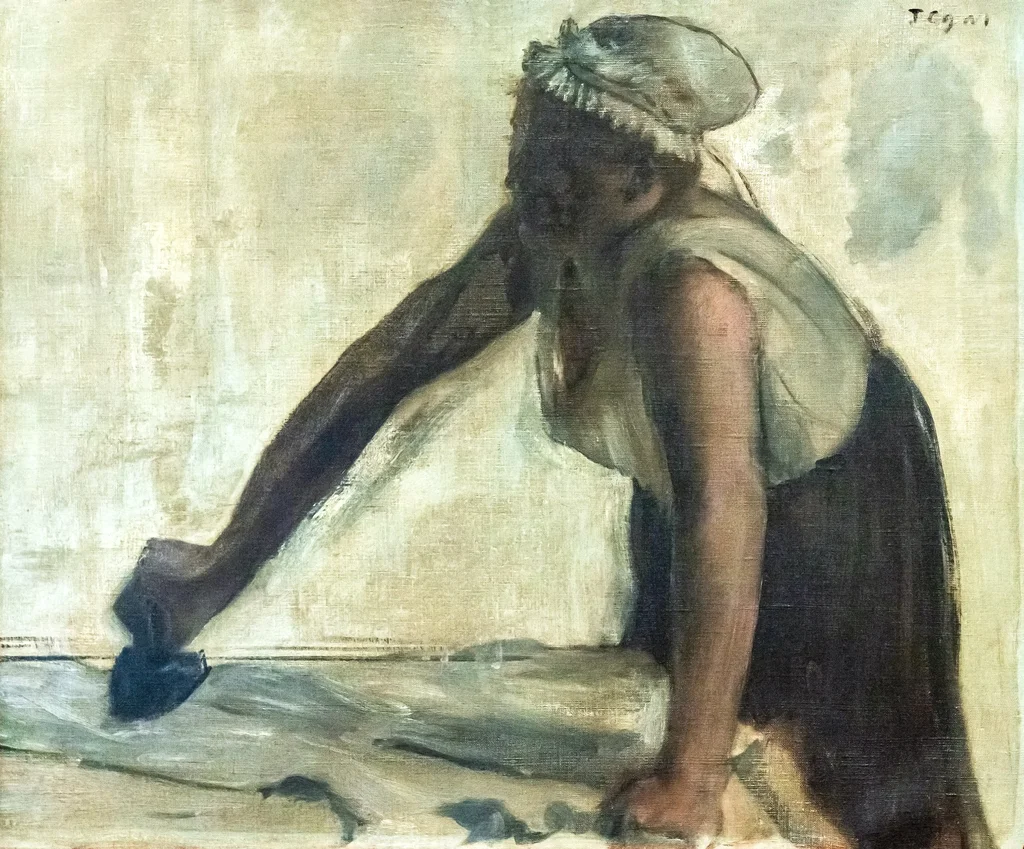
La repasseuse à contre-jour
Details
The story
Laundry was one of the largest trades open to working women in Paris in the 1870s, done in rooms kept hot and damp all day. The figure was familiar enough that Zola built his novel L'Assommoir, published in 1877, around a laundress named Gervaise. Degas was painting those women through exactly those years, the same few poses again and again, ironing, leaning on the board, yawning. In this one he set the woman against the window, so she reads as a dark shape in front of the daylight, which is what the French title says, against the light. It hangs in Avignon rather than Paris because it belonged to Jacques Doucet, the couturier who dressed Parisian society and put his money into art. His heirs left their 18th-century house in Avignon to a foundation, and it opened as a museum in 1996.