Peter Paul Rubens · PD
Landscape with Ruins on Palatine Hill
Details
The story
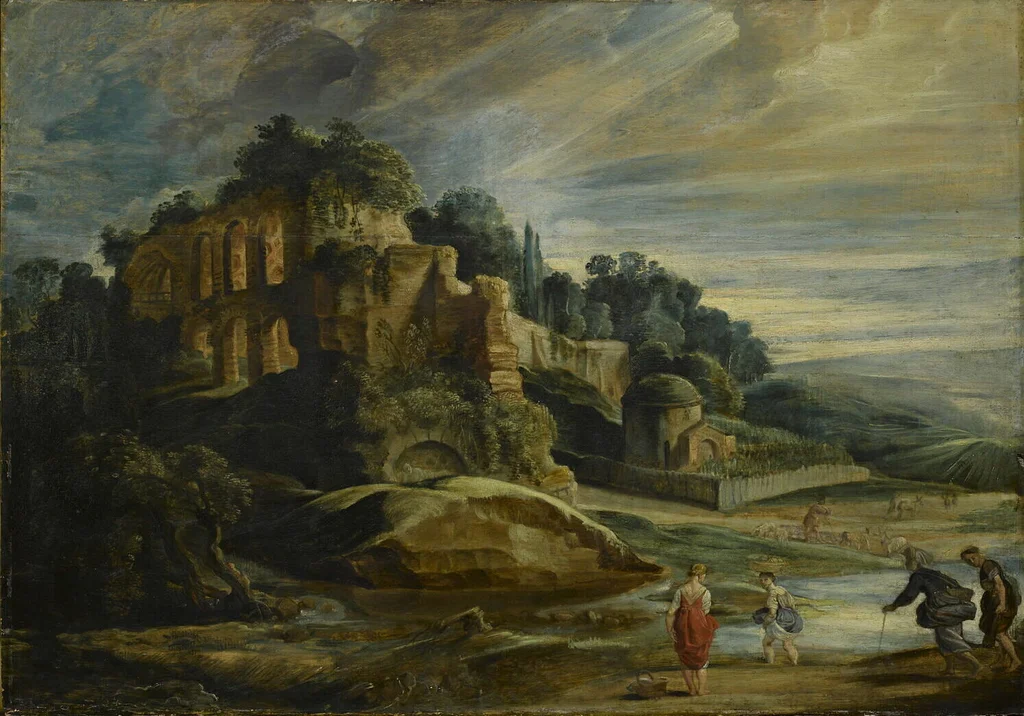
Rubens left Italy in 1608, hurrying home to Antwerp because his mother was gravely ill. He had spent eight years there, drawing ruins and studying the Venetians. This panel came several years later, probably between 1614 and 1618, and it is Rome put back together from memory in Flanders. According to the Louvre, the Palatine Hill on the right is fairly accurate, down to the small round church of San Teodoro on its flank. The big arched ruin on the left is largely invented, loosely recalling the Basilica of Maxentius on the Forum. The landscape manner owes something to Titian and to Paul Bril, a Flemish painter who had settled in Rome. When the engraver Schelte à Bolswert later made a print of the scene, it was labelled as painted in Rome, a claim the Louvre's cataloguers do not take literally. The panel entered the museum in 1869, in the bequest of the Paris doctor and collector Louis La Caze.