Wassily Kandinsky · PD
Lion Hunt
Details
The story
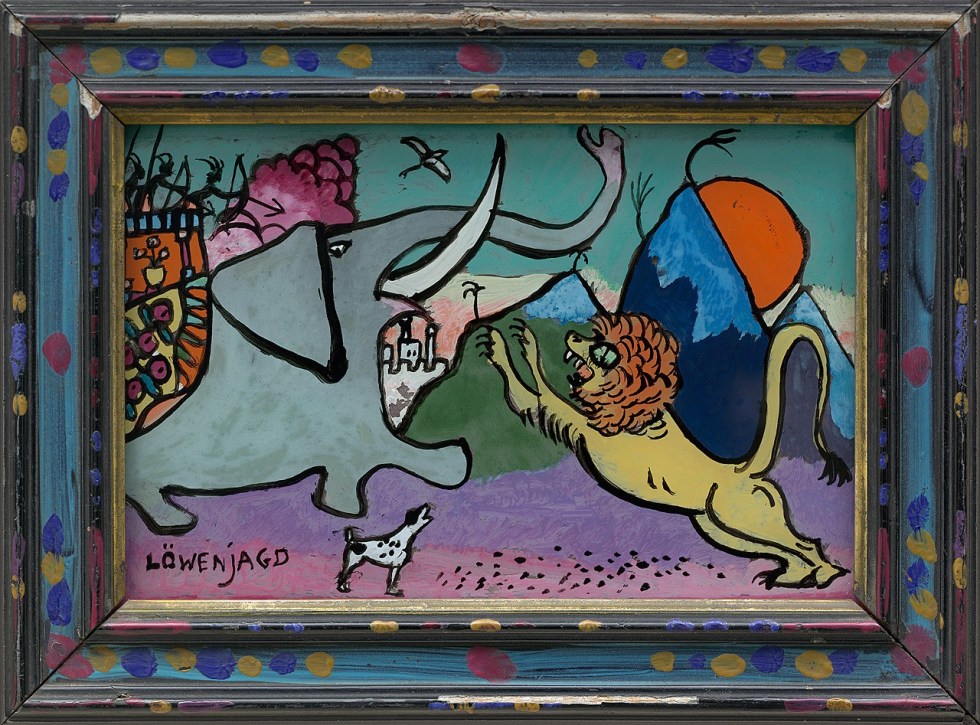
In 1911 Kandinsky spent long stretches in Murnau, a small market town in the Bavarian foothills, where his companion, the painter Gabriele Münter, had bought a house two years before. Local craftsmen there still painted pictures on the back of glass, mostly saints and votive images sold to visitors. Münter learned the method from one of them, Heinrich Rambold, and Kandinsky soon took it up as well. It means working in reverse. The outlines and the smallest details go down first, the background last, and the finished picture is seen through the glass. Lion Hunt is smaller than a postcard, and he made the frame himself, dotting it with colour the way Bavarian folk painters decorated theirs. He even lettered the title, Löwenjagd, onto the glass. Between 1909 and 1918 he made about 50 of these glass paintings, and in 1912 the Blue Rider almanac he edited with Franz Marc printed 12 Bavarian folk glass pictures alongside modern art.