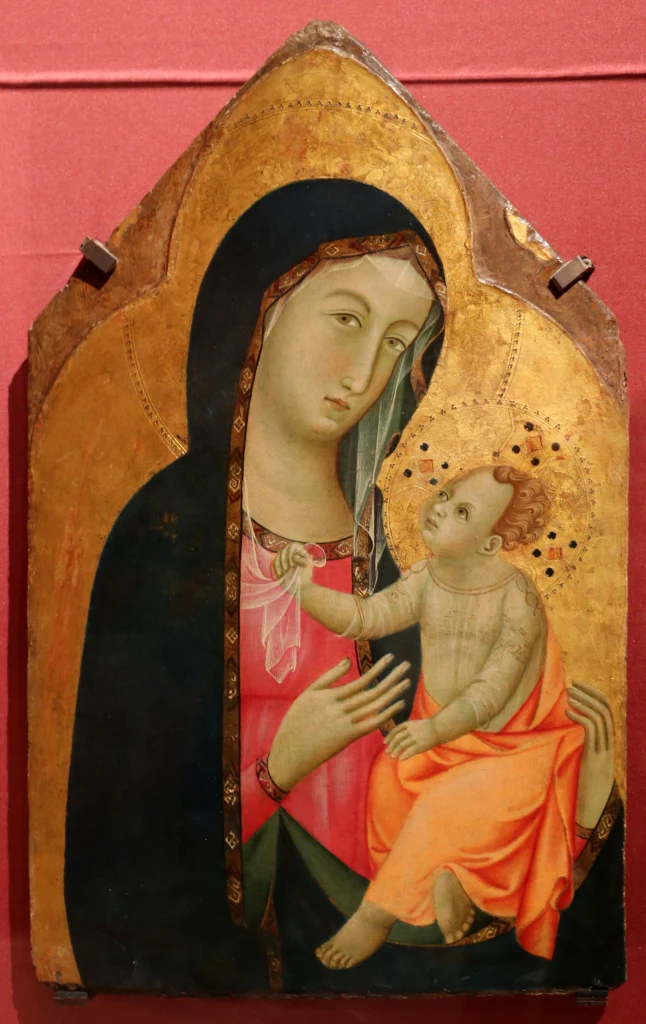
Madonna and Child
Details
The story
We do not know this painter's name. He is called the Master of San Torpè after a picture he once made for a church in Pisa, a work that itself no longer survives, so the man is identified by an absence. Around 1320 he painted this Madonna as the centre of a larger altarpiece whose side panels, with two saints, are now in a museum in Pisa. He worked in the manner of Duccio, the great Sienese painter whose gentler, more human faces were reshaping Tuscan art in these years. The pose follows an old Byzantine formula in which Mary presents the child and points the way to him. Look at what the child is doing. He grips the thin veil on his mother's head, a cloth that stood for the shroud of his burial, and he crosses his legs and shows the bare heel of one foot, the foot said to crush the devil. The gold behind them is not a sky but the standard ground of a sacred image in these years, a field of light standing for heaven rather than a real place.