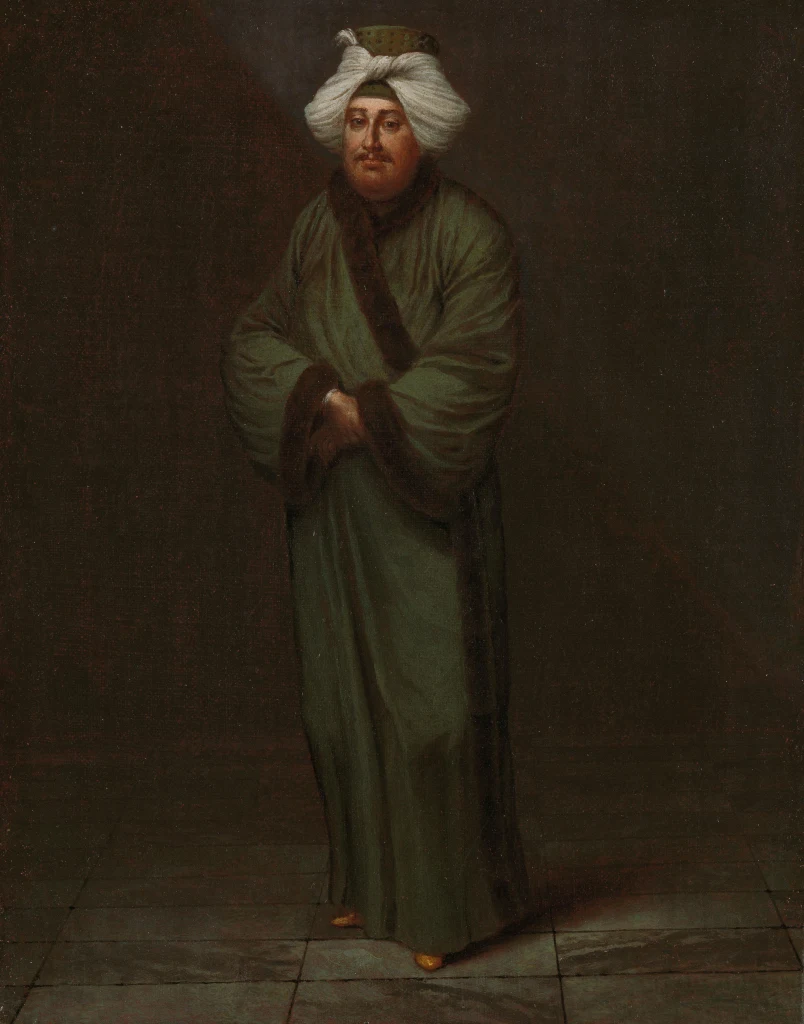
Mehmet, the vizir kâhyasi
Details
The story
Kâhya, or kethüda, first meant the steward of a household, the man who ran a great man's house and servants. The grand vizier's kâhya began that way. Over time the post grew into one of the most powerful in the government, handling much of its day-to-day business, and the Rijksmuseum traces how it moved from personal attendant to adviser and finally to a secretary of state. The man who held it in the late 1720s was Mehmed Pasha, who was also the grand vizier's son-in-law. The inscription on this canvas gives his name as Mehemmet Chiaia.
Vanmour shows him in a green kaftan trimmed with fur and a turban suited to his rank. According to the museum he lived in great luxury. When he was put to death together with the grand vizier in the revolt of 1730, his houses were searched, and hoards of gold were found hidden in secret cellars.
More works by Jean Baptiste Vanmour
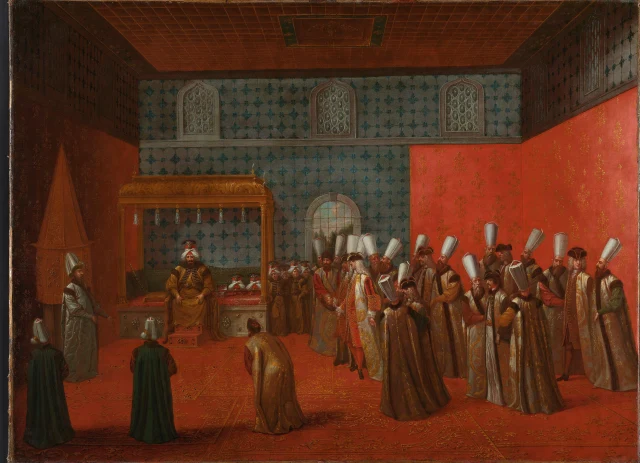 Ambassador Cornelis Calkoen in Audience with Sultan Ahmed III, 14 September 1727Jean Baptiste Vanmour, 1728
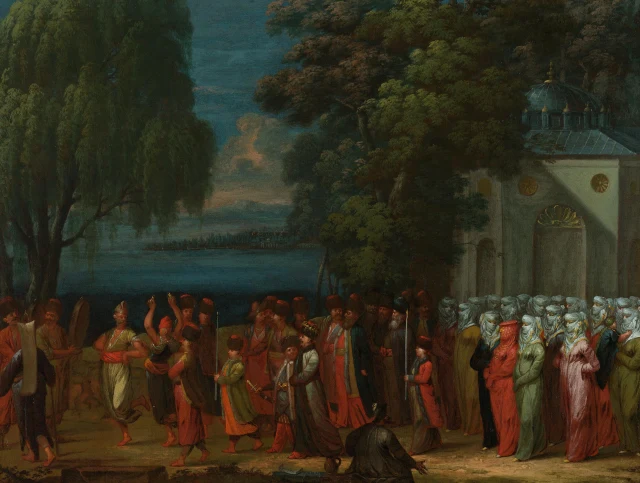 Armenian WeddingJean Baptiste Vanmour, 1728
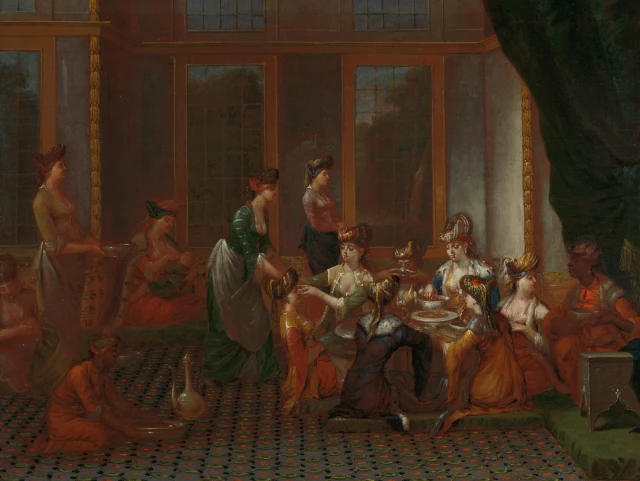 Banquet of Distinguished Turkish WomenJean Baptiste Vanmour, 1728
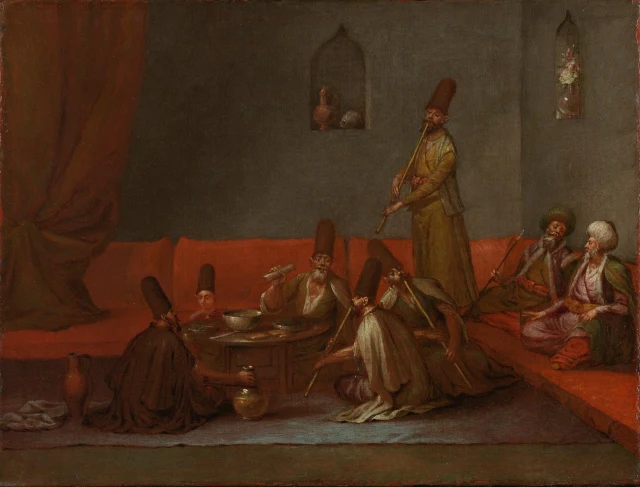 Dervishes Sharing a MealJean Baptiste Vanmour, 1728
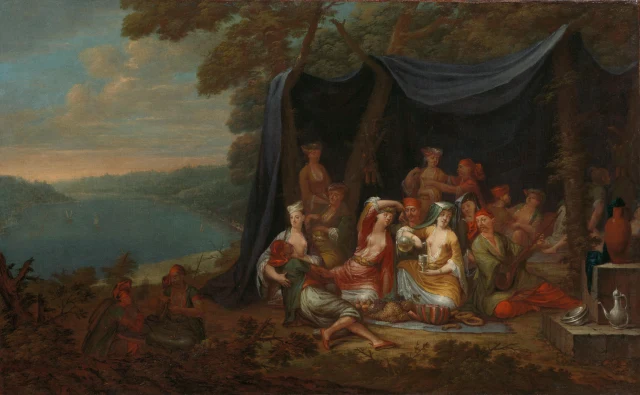 Fête champêtre with Turkish Courtiers under a TentJean Baptiste Vanmour, 1728