Niobid Krater
Details
The story
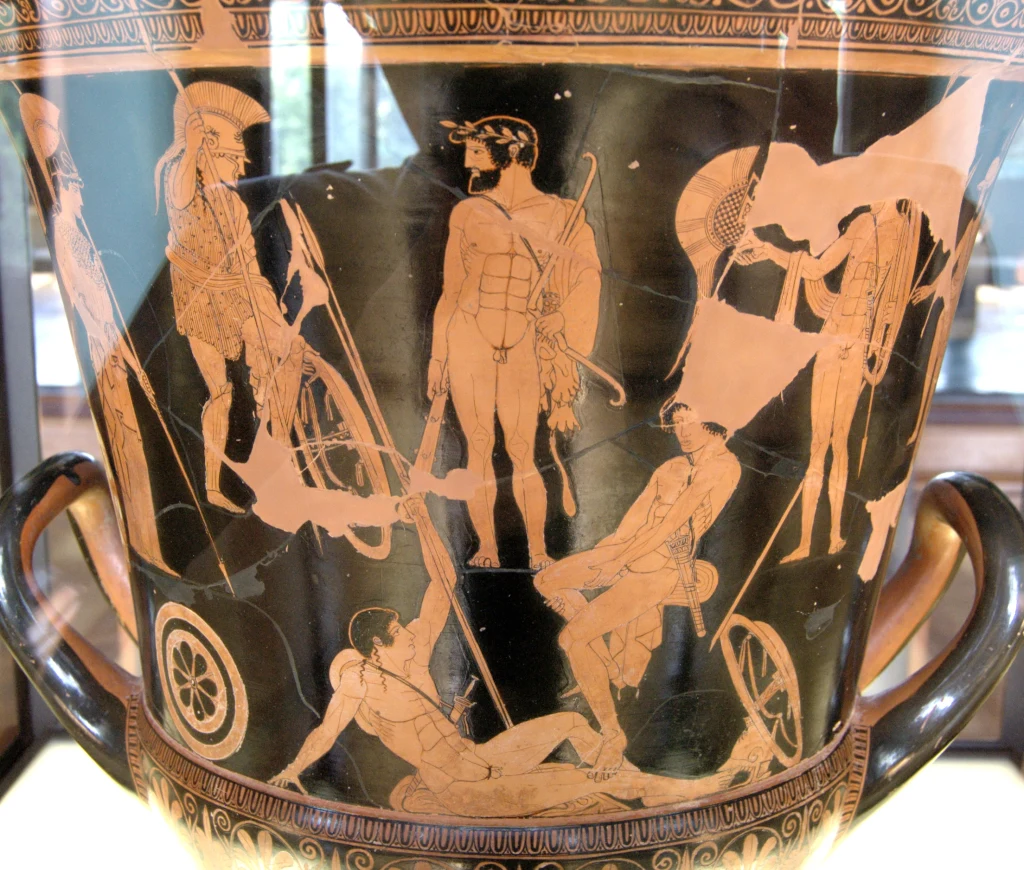
Around 460 BC Athens was decorating its new public buildings with huge wall paintings. Ancient writers credit Polygnotos of Thasos and his colleague Mikon with scenes in which figures stood higher and lower across the wall, as if spread over hillsides, instead of all on one ground line. Not one of those murals survives, and this wine-mixing bowl is one of the earliest surviving echoes of them. On its main side the figures are placed on several levels of rocky ground, some seated or lying above the others. Only two can be named with confidence, Heracles with his club and lion skin, and Athena in her helmet. The Louvre labels the scene Heracles among the Argonauts and adds a question mark, and scholars have also proposed heroes gathering before the battle of Marathon, or a scene in the underworld. On the other side Apollo and Artemis shoot their arrows at the children of Niobe among rocks and a tree. The krater was dug up in 1880 at Orvieto, in Etruscan Italy, and the Louvre bought it in 1883.