Claude Monet · PD
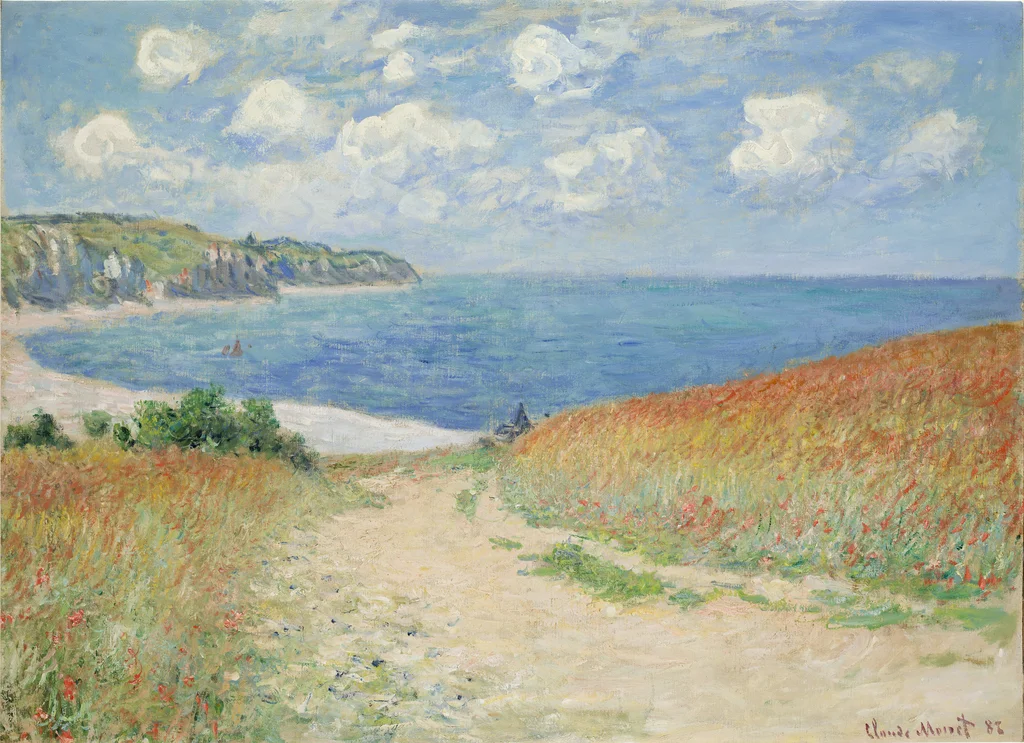
Path in the Wheat at Pourville
Details
The story
In January 1882 a Paris bank called the Union Générale went under. Its shares fell from about 3,000 francs to 800 inside nine days, and the collapse turned into the worst financial crisis France saw in the 19th century. Among the people it nearly took with it was Paul Durand-Ruel, the dealer who bought almost everything Monet painted and who had just agreed to pay for another Impressionist exhibition that March.
Monet spent most of that year on the Normandy coast at Pourville, a small village along from Dieppe, working the cliffs, the beaches and the fields on top of them. He came home with something close to 100 canvases.
This one, a track cut through wheat above the sea, passed into Durand-Ruel's stock and was sold on in 1883 while he was still scrambling. More than 40 years later Monet told a French critic that without Durand-Ruel the Impressionists would all have starved.