Peter Paul Rubens · PD
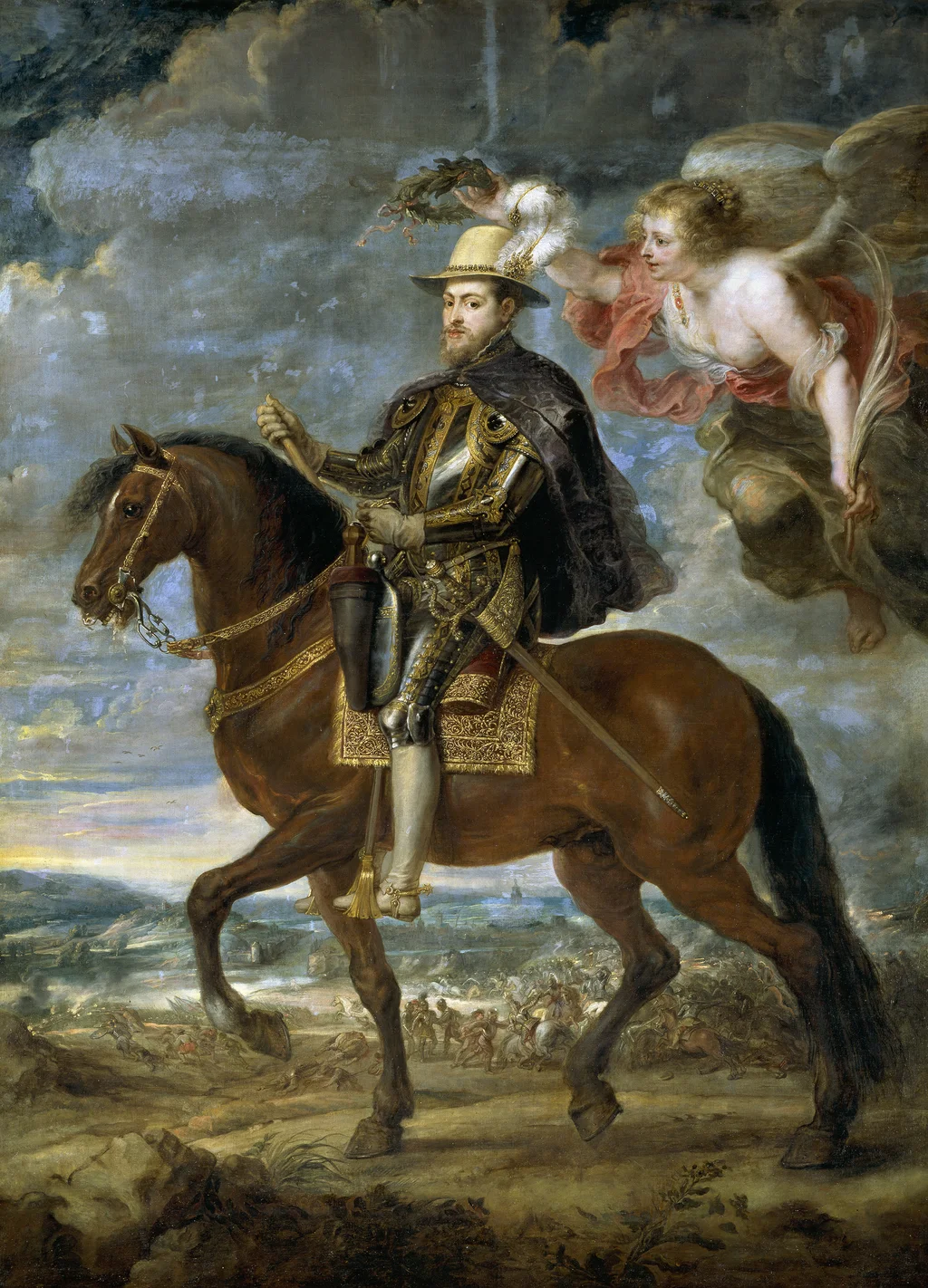
Philip II on Horseback
Details
The story
Philip II had been dead for more than 30 years when this was painted, and Rubens never saw him. He assembled the portrait from two other pictures. The horse and the armoured body repeat the figure of Charles V in a tapestry of the Tunis campaign designed by Jan Vermeyen, who had gone on that expedition. The head comes from Titian's 1551 portrait of Philip in armour, which Rubens copied during his stay in Madrid in 1628 and 1629. The face matches Titian's so closely in size and proportion that he probably transferred it by mechanical means. Philip IV was hanging equestrian portraits of his family through the royal palaces in those years, and his grandfather was the one missing. Why Rubens made the picture, and where, is not documented. The ground under the paint contains chalk of a kind more usual in Flanders than in Spain, which points to Antwerp. In the 18th century strips of canvas were added top and bottom, and in 2009 they were folded back behind the stretcher.