Paul Cézanne · PD
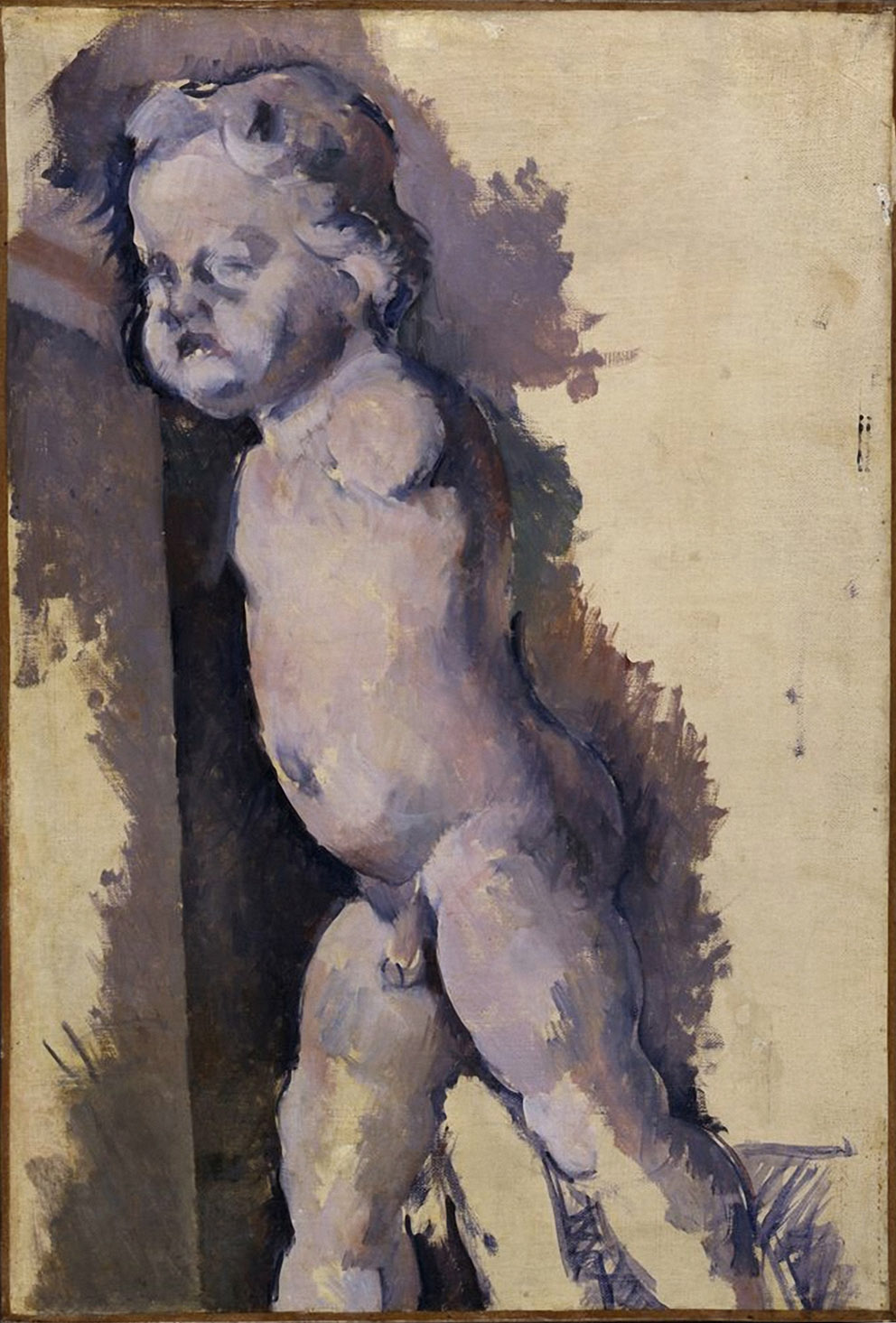
Plaster Cupid
Details
The story
For years a small plaster cupid stood in Cezanne's studio, a cast of a Baroque statuette long linked to the sculptor Pierre Puget. He drew it and painted it again and again in the 1890s. In the best-known version, at the Courtauld in London, the little figure is crowded by apples and onions and the floor tilts up alarmingly. This smaller canvas does the opposite. It isolates the cupid almost alone, letting you feel the awkward, top-heavy twist of its body. Cezanne was in his mid-fifties when he made it, working mostly by himself down in Aix, still largely unknown to the public. That was about to change. In 1895 the young dealer Ambroise Vollard gave him his first solo show in Paris, and painters began making the trip south to see him. This canvas passed through Vollard's hands, then the Barnes Foundation, before reaching Harvard in 1964.