Peter Paul Rubens / After Jan Cornelisz Vermeyen · PD
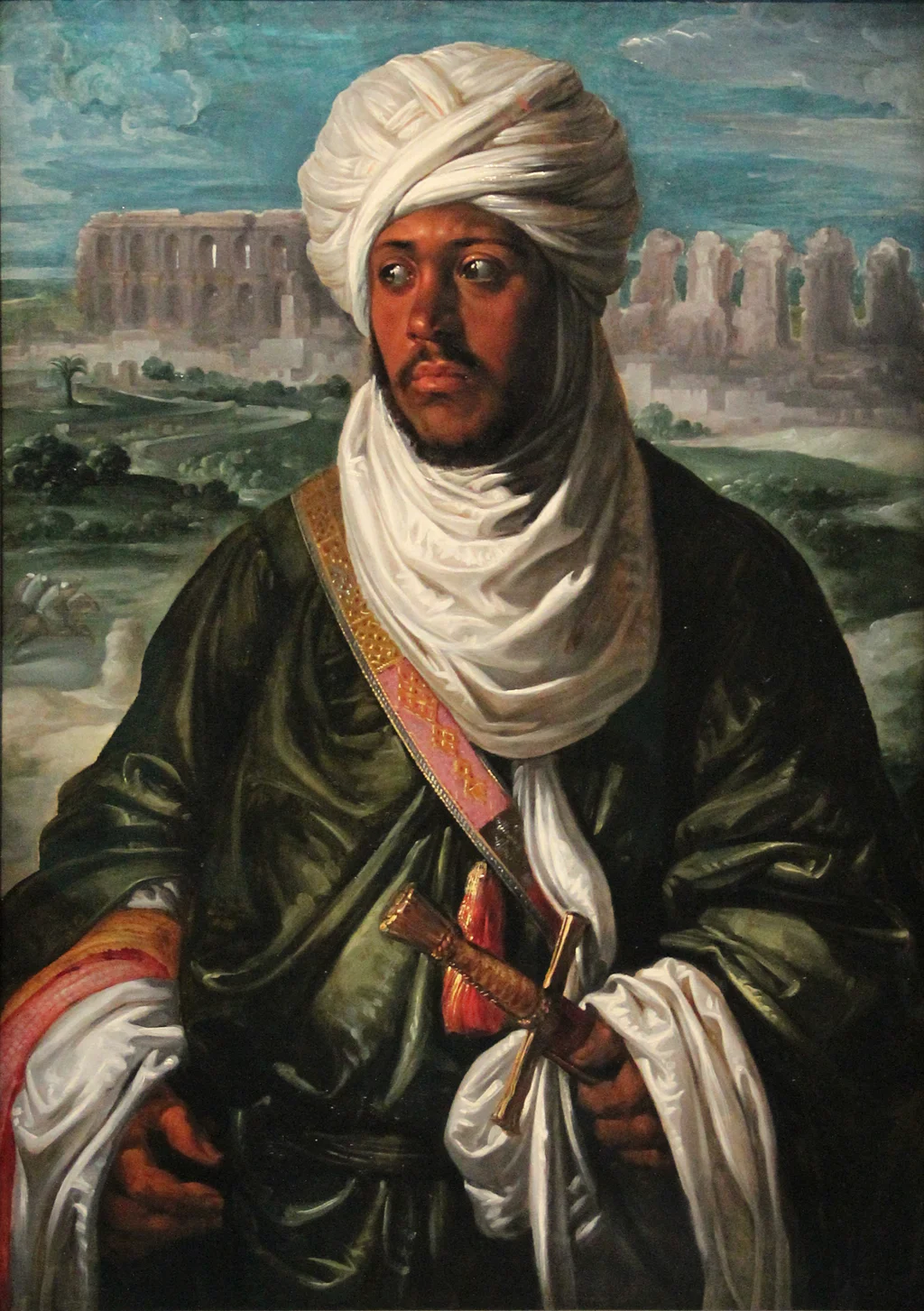
Portrait of Mulay Ahmad
Details
The story
Rubens came home to Antwerp from eight years in Italy in 1608, and painted this within a year or so of unpacking. The sitter, Mulay Ahmad of the Hafsid dynasty that ruled Tunis, had been dead for decades and Rubens never laid eyes on him. He worked from the record left by Jan Vermeyen, a Netherlandish artist who went to Tunis in 1535 with the army of the emperor Charles V and drew the North African rulers there from life. Rubens turned the head into a half-length figure on a panel and set a long Roman aqueduct running across the country behind him. He kept the picture in his own house for the rest of his life and went back to it whenever he needed the African king among the three who come to Bethlehem in his Adoration paintings.