Claude Monet · PD
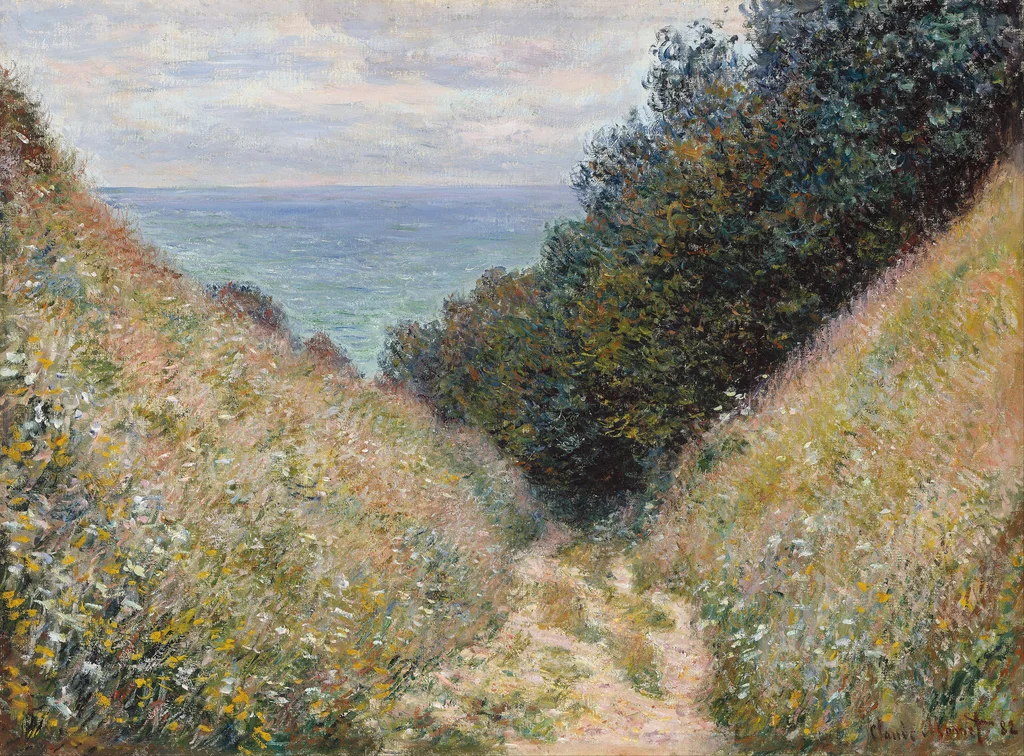
Road at La Cavée, Pourville
Details
The story
In the north of France a cavée is a sunken lane, a track worn or cut down into a slope, and at Pourville, a village on the Normandy coast near Dieppe, one of them gave its name to this road. Monet painted it more than once in 1882. On 10 October that year he sold his dealer, Paul Durand-Ruel, four canvases all called Road at La Cavée, Pourville, and since nobody photographed them, it cannot be said for certain that this is one of the four. The Museum of Fine Arts reads the composition as an X, a scheme Monet had first tried in 1863 or 1864 and had refined over almost 20 years. The path runs between two soft mounds, and where it goes after that is left uncertain. There is nobody on it. By this date, the museum notes, Monet rarely put a figure into a landscape, and one walker here would turn the scene into an anecdote. The picture came to the museum in 1924 with the bequest of Susan Mason Loring of Beverly, on the coast north of Boston.