Roman-period Sphinx
Details
The story
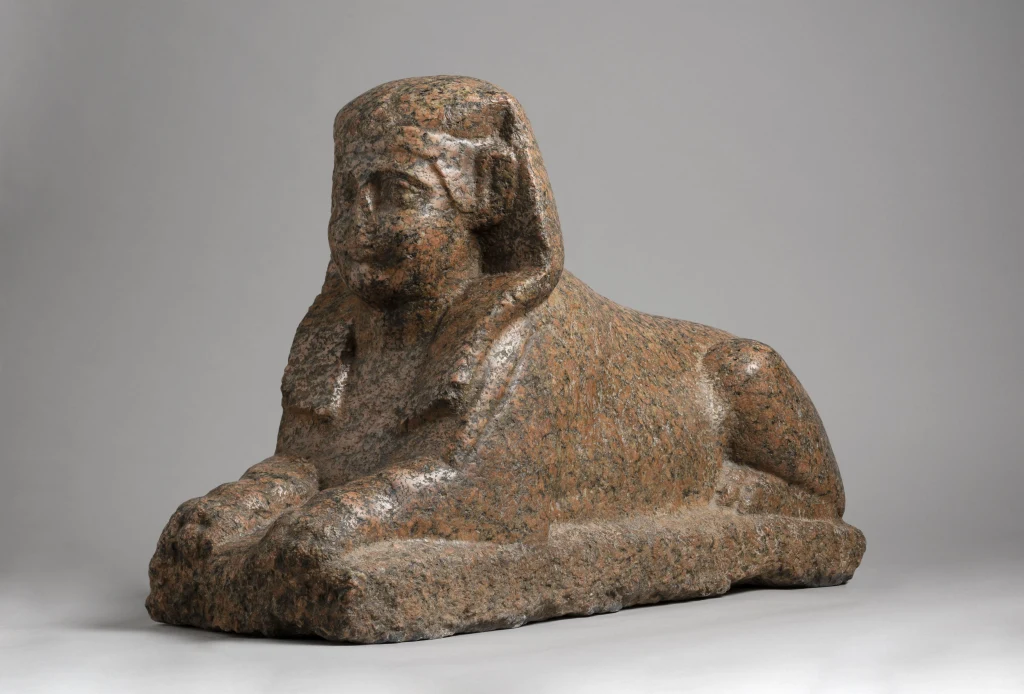
In 30 BC Egypt became a province of Rome, governed for the emperor by a prefect in Alexandria, and Egyptian workshops went on carving the old images under the new masters. The museum can place this small granite sphinx only somewhere in the Roman centuries, between that year and 395, when the empire was divided for good between two emperors.
The lion's body is far older than Rome. In Egypt the lion was linked with the sun from the early centuries of the pharaohs, and the sphinx stood for Horus on the horizon, an image of the king as son of the sun god Ra. The museum's label follows the animal further, into Christian times, when the lion came to stand for the light of Christ and became the emblem of Saint Mark, who by tradition brought the Gospel to Africa and was martyred in Alexandria. Where the sphinx was found is not recorded. It was already listed in 1822 in a catalogue of the collection of Bernardino Drovetti, the French consul in Egypt, two years before Turin bought it.