Peter Paul Rubens · PD
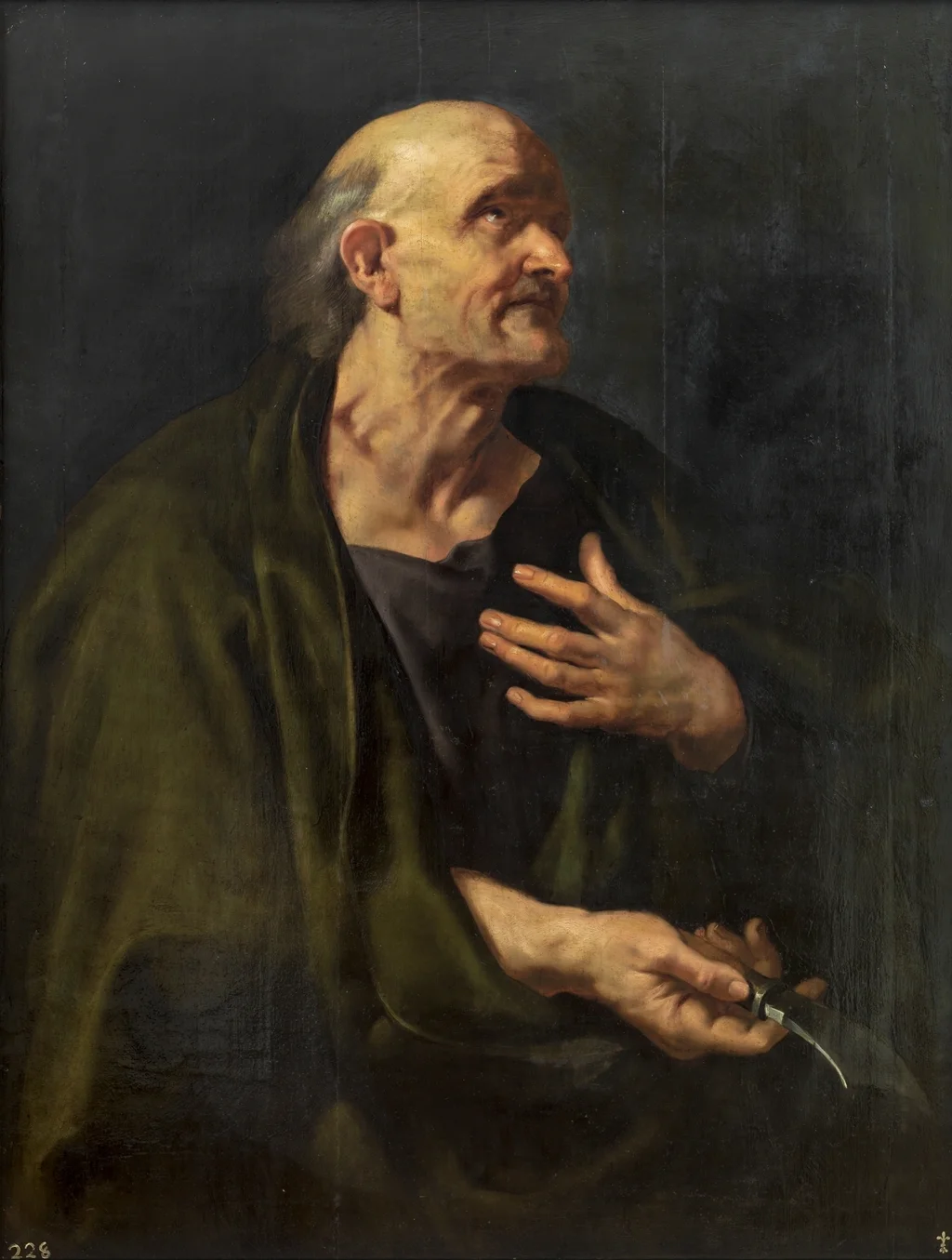
Saint Bartholomew
Details
The story
When this was painted, around 1610 to 1612, Antwerp had just stopped being a front line. The truce signed in 1609 held for 12 years, churches and private patrons started ordering religious pictures again, and Rubens, back from eight years in Italy, had the fastest workshop in the city. The apostles he produced then look Italian in the way they are built: heavy bodies pushed close to the surface, a dark ground behind them, light coming hard from one side. Bartholomew is the apostle tradition says was flayed alive, which is why he holds a knife. Rubens keeps it at that. There is no skin, no wound and no torture scene, only an elderly man with a broad blade in his hand, looking out as if he had been interrupted mid-sentence.