Paolo Veronese · PD
Scorn
Details
The story
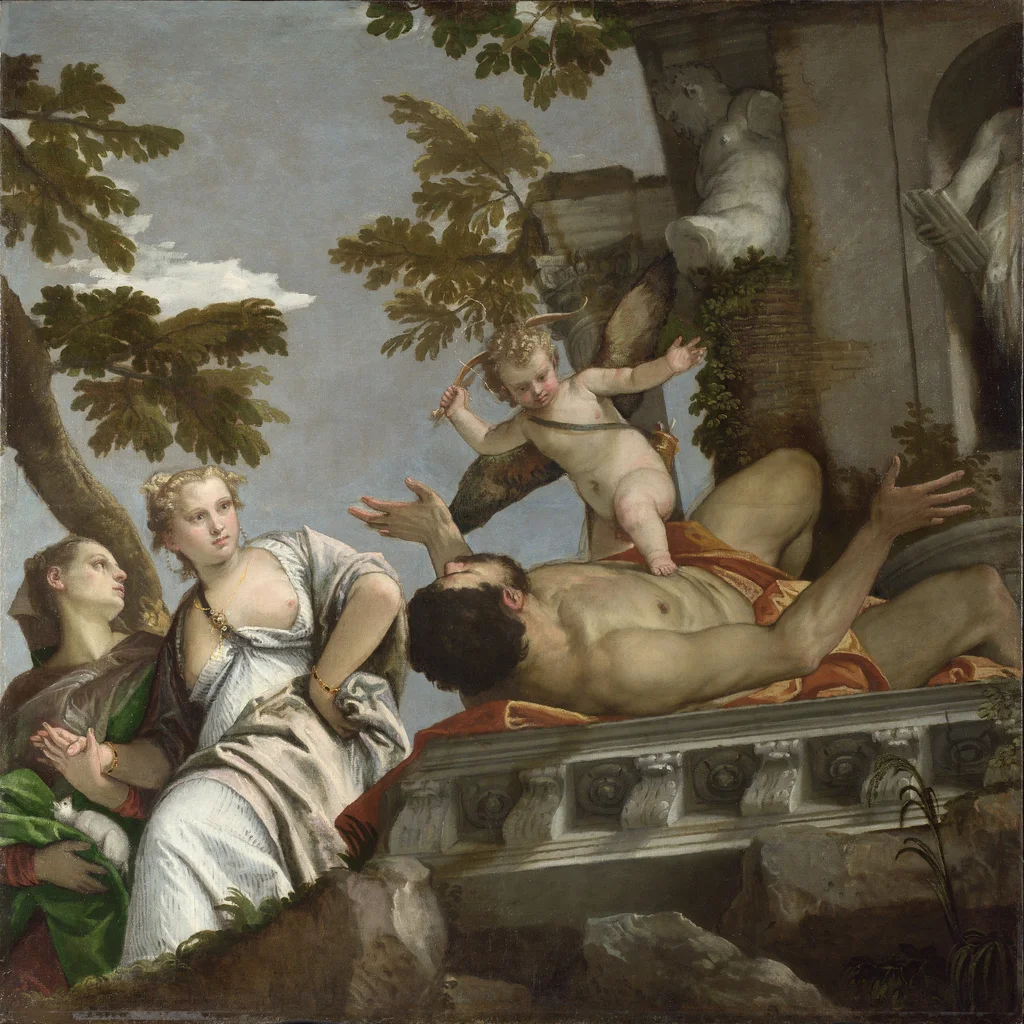
Of the four love allegories Veronese painted as a set, this is the one the National Gallery calls the hardest to interpret. A naked man lies sprawled on a ledge of ruined classical masonry, and Cupid stands on his chest, beating him with a bow whose string has snapped. Above them on the ruin is a limbless stone satyr, the half-goat creature that stood for raw lust. A bare-breasted woman glances down at the man as a companion leads her away, holding a small white ermine with a black-tipped tail. In Renaissance Italy the ermine meant purity and moderation, and it was believed to protect women in pregnancy. One reading, drawn from philosophy current among Italian thinkers of the time, sees the two women as earthly and heavenly love holding hands, and the man punished for wanting only the bodily kind.