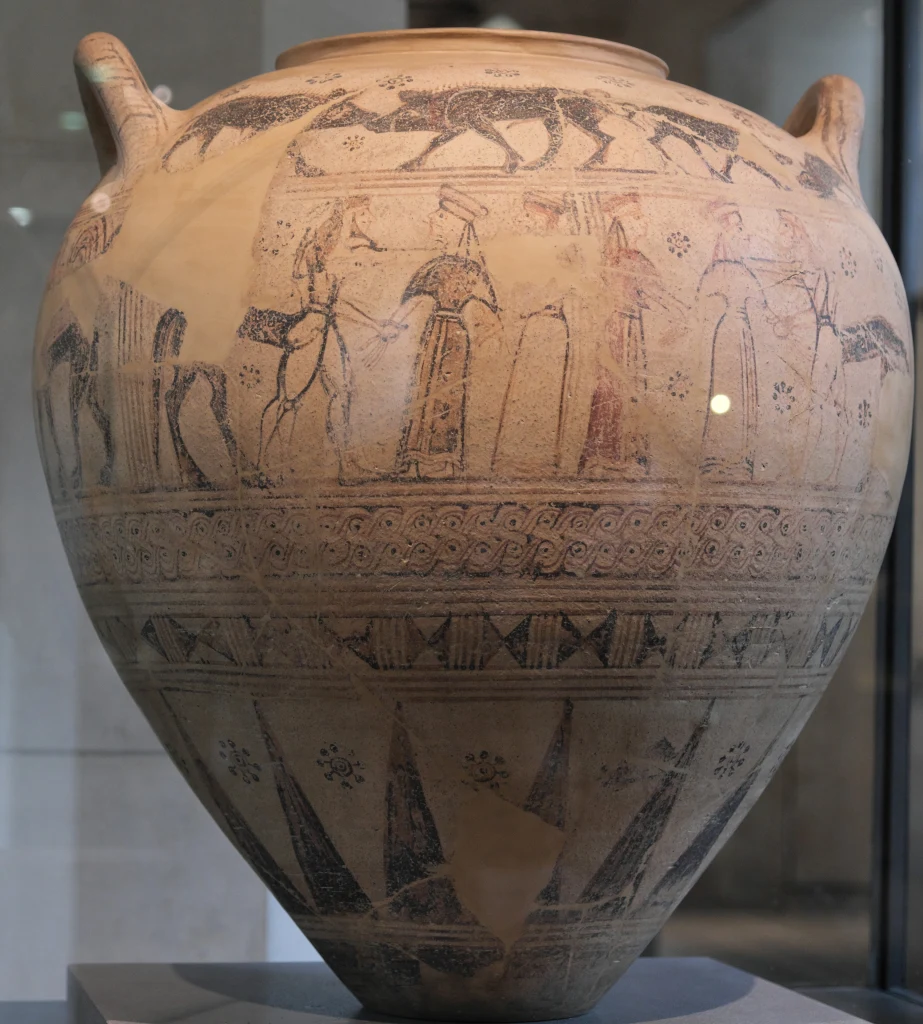
Stamnos with Theseus and the Minotaur
Details
The story
Megara Hyblaea was a small colony on the east coast of Sicily, founded by settlers from Megara, a city between Athens and Corinth. In the 7th century BC its potters made this stamnos, a wide-shouldered storage jar, and painted it in the style now called Orientalizing, after the animals and monsters Greek craftsmen borrowed from textiles and metalwork arriving from the Near East. Boars and wild goats face each other on the shoulder, and lower down sphinxes face each other on either side of a monkey.
The figures are drawn in outline and silhouette on a pale ivory slip and picked out in red, yellow and white. On one side Theseus kills the Minotaur with a sword and a club, and the monster is chained by rings round its ankles. On the other, centaurs seize Lapith women.
The jar was probably found at Selinunte, the city Megara Hyblaea itself founded further west on the island. Its base, its mouth and parts of the body are restored, and the Friends of the Louvre gave it to the museum in 1961.