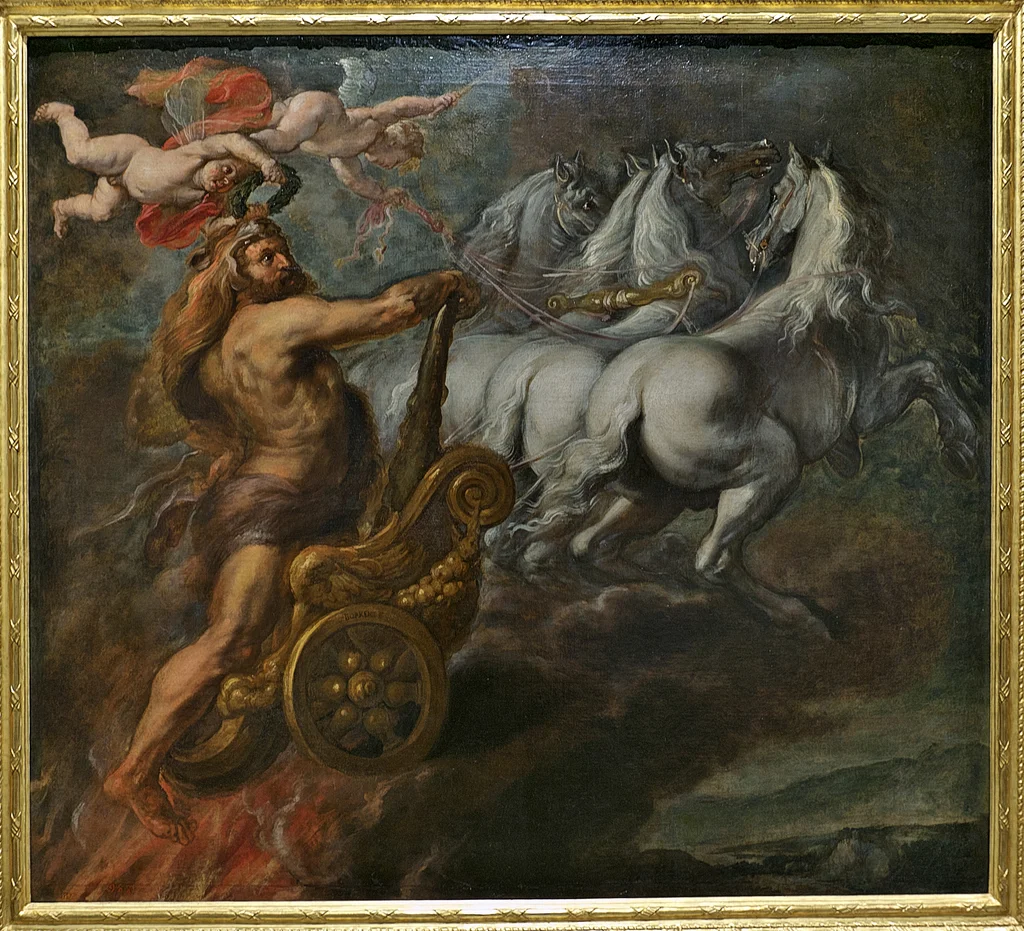
Jan Baptist Borrekens / After Peter Paul Rubens / Peter Paul Rubens · CC-BY-SA-4.0
The Apotheosis of Hercules
Details
The story
To stand in front of this canvas you go to A Coruña, on the Atlantic coast in the far northwest of Spain. The Prado owns it and has placed it on long-term deposit at the city's Museo de Bellas Artes.
It was made for the biggest commission Rubens ever received from Philip IV. From 1636 onwards, more than 60 paintings were shipped from Antwerp to Madrid to line a hunting lodge in the hills of El Pardo, most of them episodes from Ovid. Rubens worked the compositions out in small oil sketches on panel, and painters in his orbit enlarged them onto canvas. Jean Baptiste Borkens, who also made a comfortable living dealing pictures, contributed exactly one to the whole scheme. This is it: Hercules, his mortal part burned away, carried up to the stars in a chariot.
On the back of the frame is an old label with the palace inventory number 988. It calls the painting Pluto in a chariot drawn by four horses.