Sailko · PD
The assumption of the Virgin
Details
The story
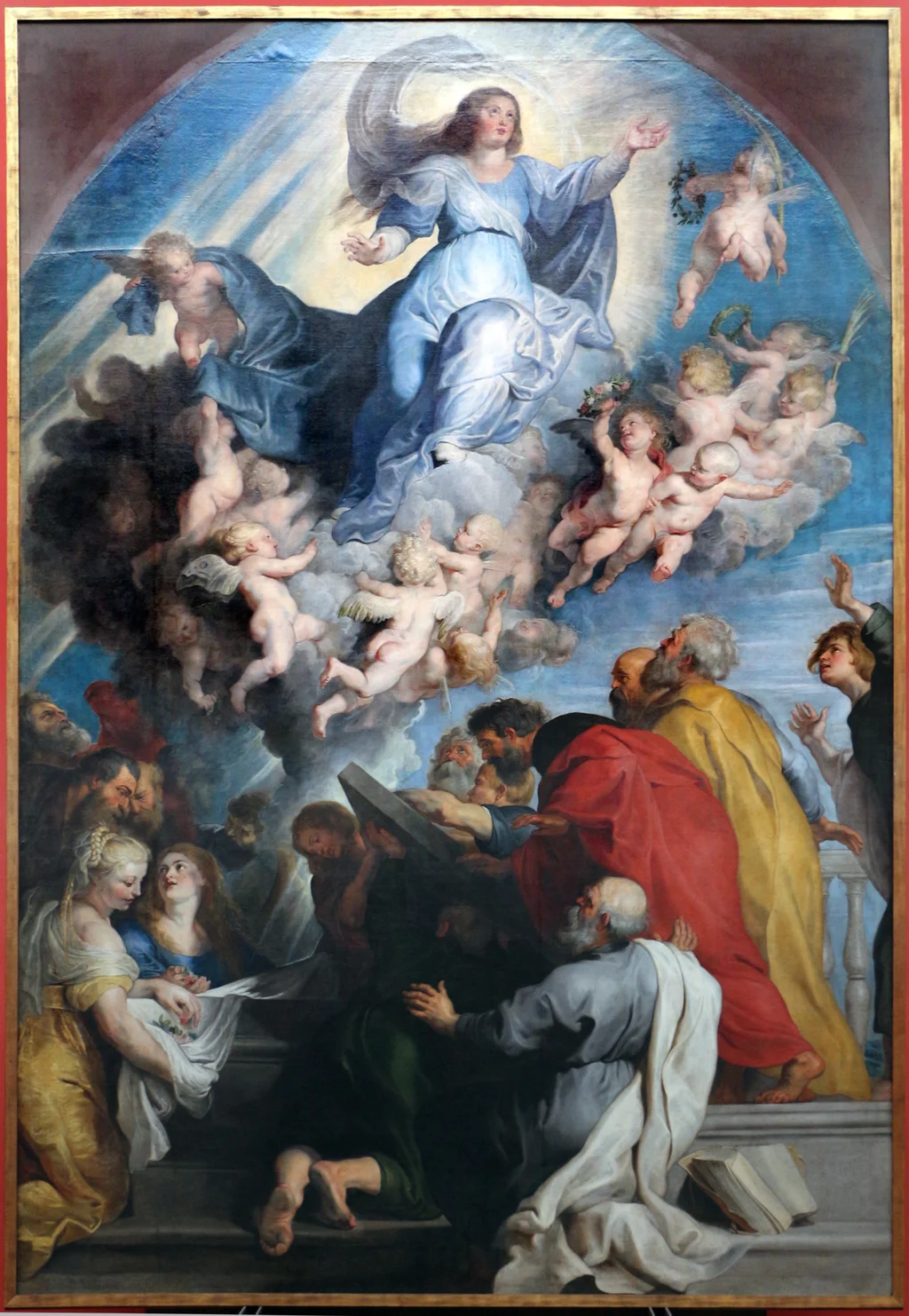
In 1609 Spain and the Dutch Republic signed the Twelve Years' Truce, and in the Catholic south, governed from Brussels by Archduke Albert and the Infanta Isabella, the pause in fighting turned into a wave of church building and decoration. Churches damaged in the religious wars of the previous decades needed new altarpieces, and Rubens's workshop in Antwerp became the busiest supplier. This one, about five metres tall and rounded at the top to fit its altar, was made around 1616 for the high altar of a Carmelite church in Brussels. The museum credits it to Rubens and his workshop, meaning assistants carried out part of the painting from his design. It was probably painted on wood at first and later transferred to canvas. After the French Revolution it spent some years in Paris, and the French government sent it back to Brussels in 1815.