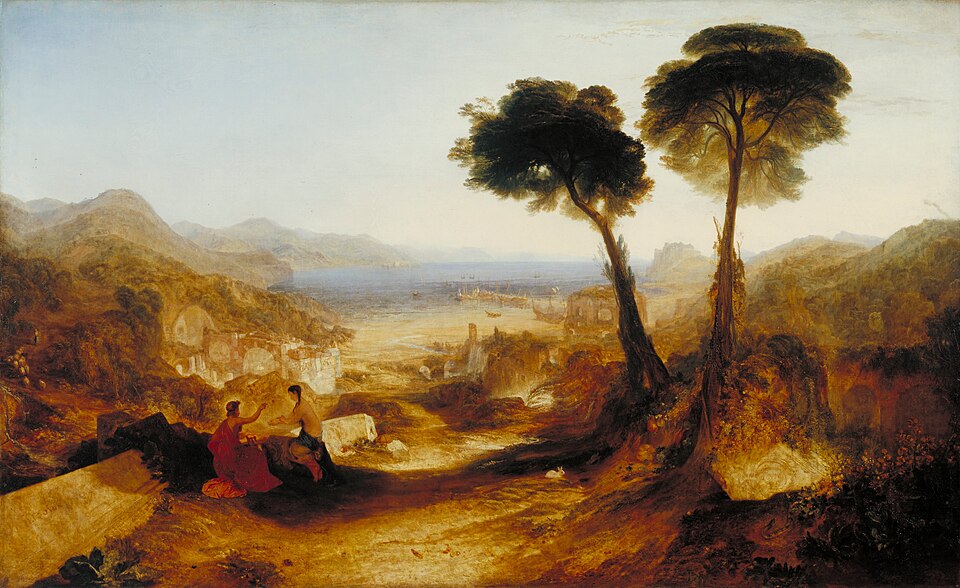
J. M. W. Turner, The Bay of Baiae, with Apollo and the Sibyl, 1823. Wikimedia Commons. · PD
The Bay of Baiae, with Apollo and the Sibyl
Details
The story
Turner first reached Italy in 1819, a few years after the Napoleonic Wars had reopened the Continent to British travellers, and he filled sketchbooks along the coast west of Naples. Back in London he turned his drawings of Baiae, once the seaside retreat of rich Romans, into this large canvas for the Royal Academy exhibition of 1823. In the foreground sit Apollo and the Sibyl of Cumae. In Ovid's telling, the god offers her whatever she wants, and she asks to live as many years as there are grains of sand in her hand. She forgets to ask for youth, so she goes on ageing for centuries, and the bay behind her is scattered with Roman ruins. Turner's fellow painter George Jones knew how much of the view was invented, and wrote two Latin words on the frame, Splendide Mendax, splendidly untruthful. Turner is said never to have removed them.