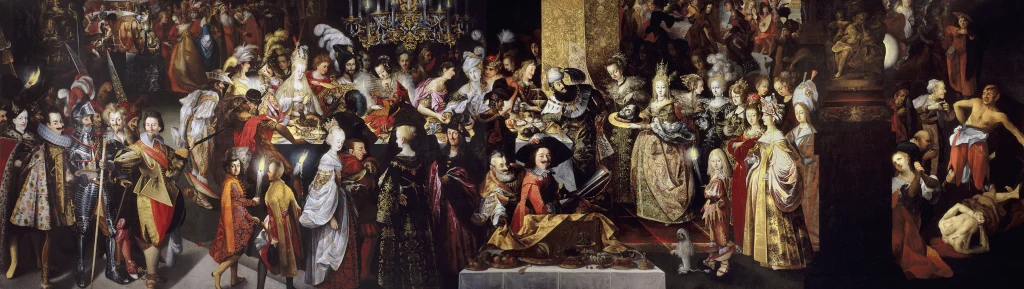
The Beheading of Saint John the Baptist and Herod's Banquet
Details
The story
The museum dates this canvas 1630 to 1633, the middle years of the Thirty Years' War, and Strobel staged the beheading of John the Baptist as an event at a court of his own century. Velvet and lace collars, plumed hats, a gilt column, a chandelier overhead, a small white dog crossing the floor between the guests.
The Gospel story is pushed out to the edges. Past the column on the far right lies the body, where the execution has just happened. On the near side Salome holds out the platter with the head. Everything in between is banquet, rows of faces in contemporary dress, and a good many of them have been read as portraits of the men running the war, though no identification has held.
It is 280 centimetres high and 952 wide, the largest painting the Prado owns, which made it an awkward thing to own. The Spanish royal inventories track it from room to room by the number 761, and in 1794 it is recorded at Aranjuez, hung in the room where the king dined.