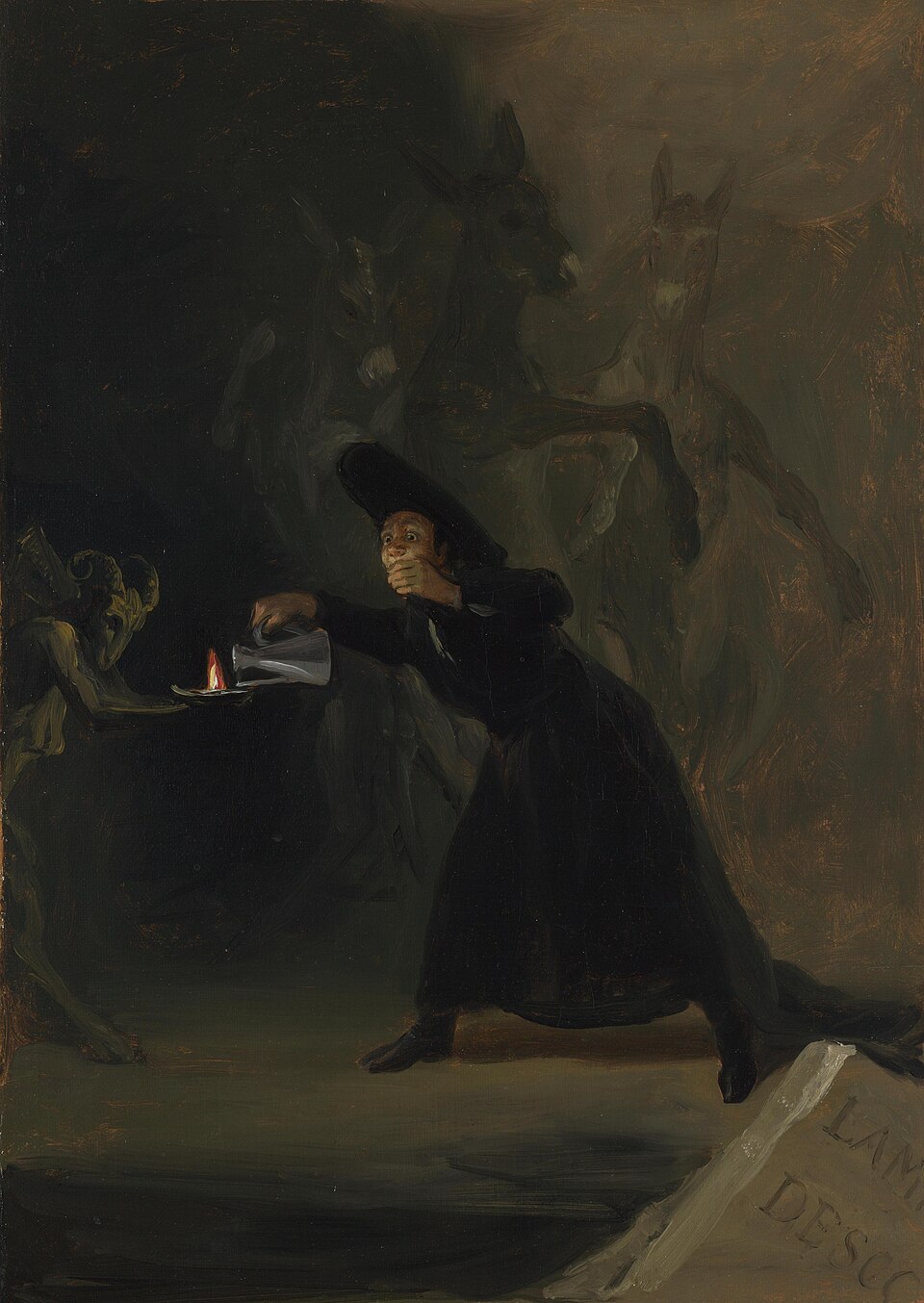
Francisco Goya, The Bewitched Man, 1798. Wikimedia Commons. · PD
The Bewitched Man
Details
The story
In 1798 the Duke and Duchess of Osuna asked Goya for a set of six small scenes of witchcraft and sorcery to hang together. This is one of them, and it comes from a comedy that Madrid audiences had been laughing at for a hundred years. The man tipping oil into a lamp is a nervous priest called Don Claudio. He has been tricked into believing he is under a spell, and that he will live only as long as this lamp keeps burning, so he feeds it in a panic. Behind him a painted cloth shows donkeys dancing, part of the joke. Goya is not painting a real haunting. He is painting superstition itself, the fear of curses that still gripped people, and doing it as broad theatre. Within a few years the same interest in the irrational would turn much darker in his private work. Here it is still played for laughs, a frightened man and a single flame he dare not let go out.