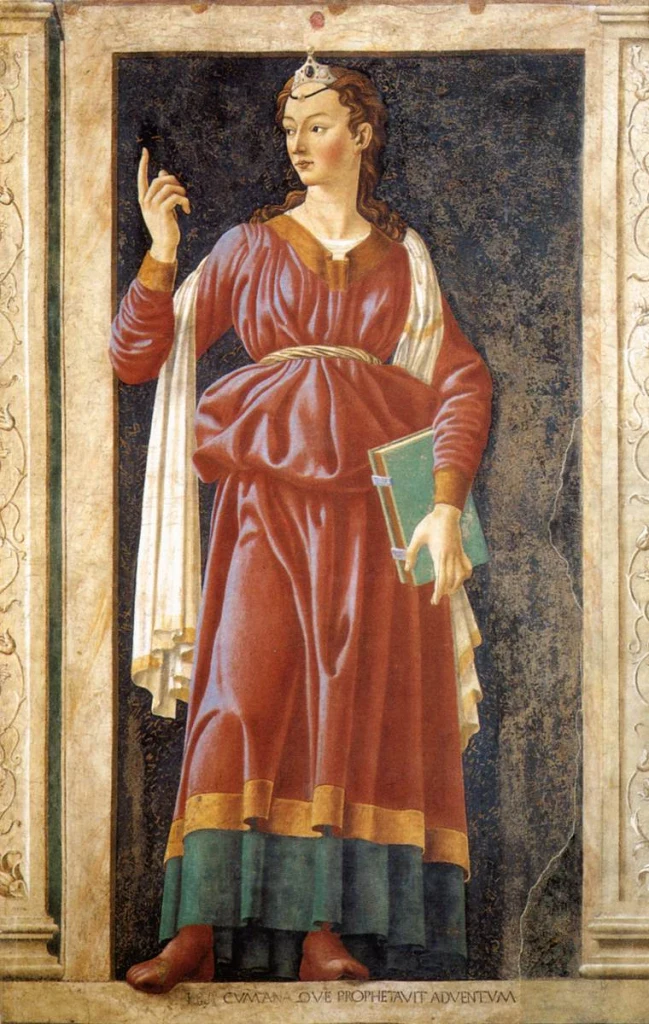
The Cumaean Sibyl
Details
The story
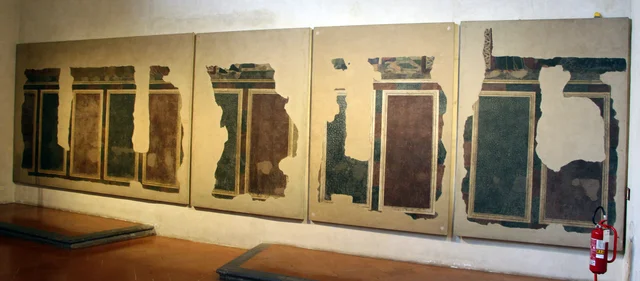
This cycle set nine famous figures side by side in painted niches, and three of them are women. Two are heroines you might expect in a Christian house, Esther from the Bible and Tomyris, a warrior queen from antiquity. The third is stranger company. The Cumaean Sibyl was a pagan prophetess, a priestess from the Greek world near Naples who supposedly delivered her oracles in a cave. She earned her place on a fifteenth-century Florentine wall for one reason. Medieval Christians read a poem by the Roman poet Virgil, written decades before Christ, as a prediction of a child who would bring a new golden age, and they credited the sibyls with foreseeing the coming of Jesus. That belief made a pagan fortune-teller respectable enough to stand near Queen Esther. Castagno gives her the same hard, sculptural weight as the men, set into her niche as if carved rather than painted, an open book in her hands.