Jusepe de Ribera · PD
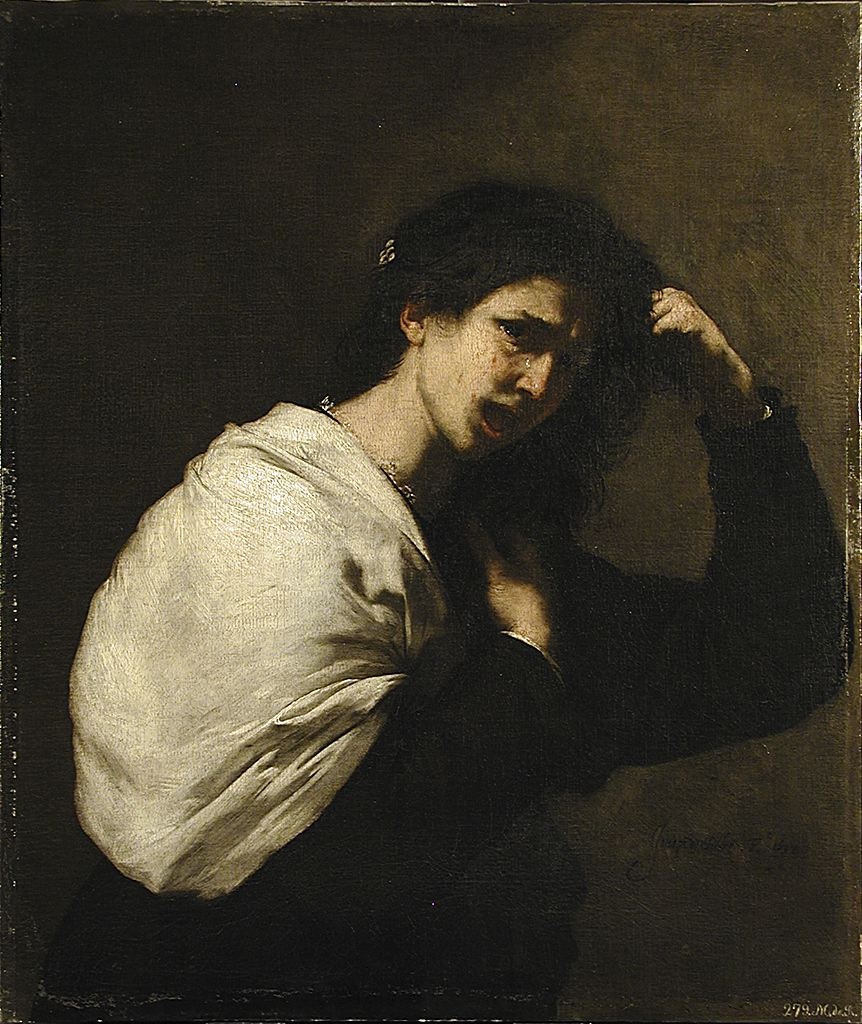
The Desperate Woman
Details
The story
A young woman tears at her own hair, her mouth open, crying, her face caught in a hard light against near-total darkness. Ribera painted her in 1638, at the height of his career in Spanish-ruled Naples, and he gives almost nothing else, no room, no story set around her, only the grief pushed right up to the front of the canvas. Who she is has never been settled. Some read her as Tamar, a daughter of King David, in the moment after her half-brother assaults her, a bleak passage from the Old Testament that few painters ever touched. Others see only a woman in mourning, or sorrow itself given a face. The picture ended up in the small Basque city of Bayonne because a local boy, Léon Bonnat, grew up to be a celebrated portrait painter and a serious collector, and he left his pictures to his hometown.