The Finding of Moses
Details
The story
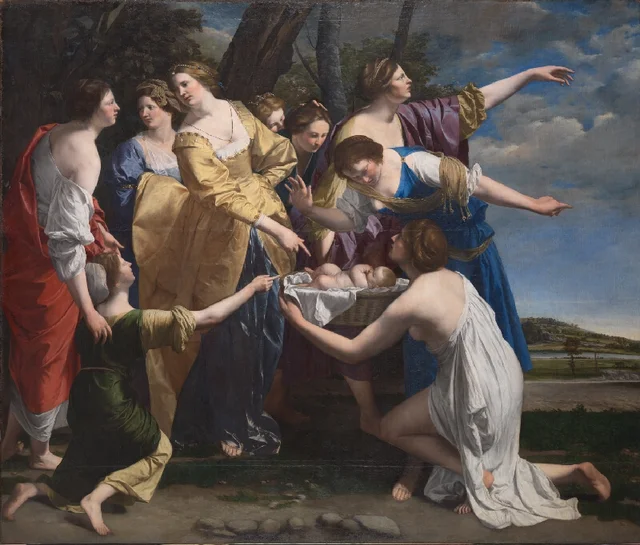
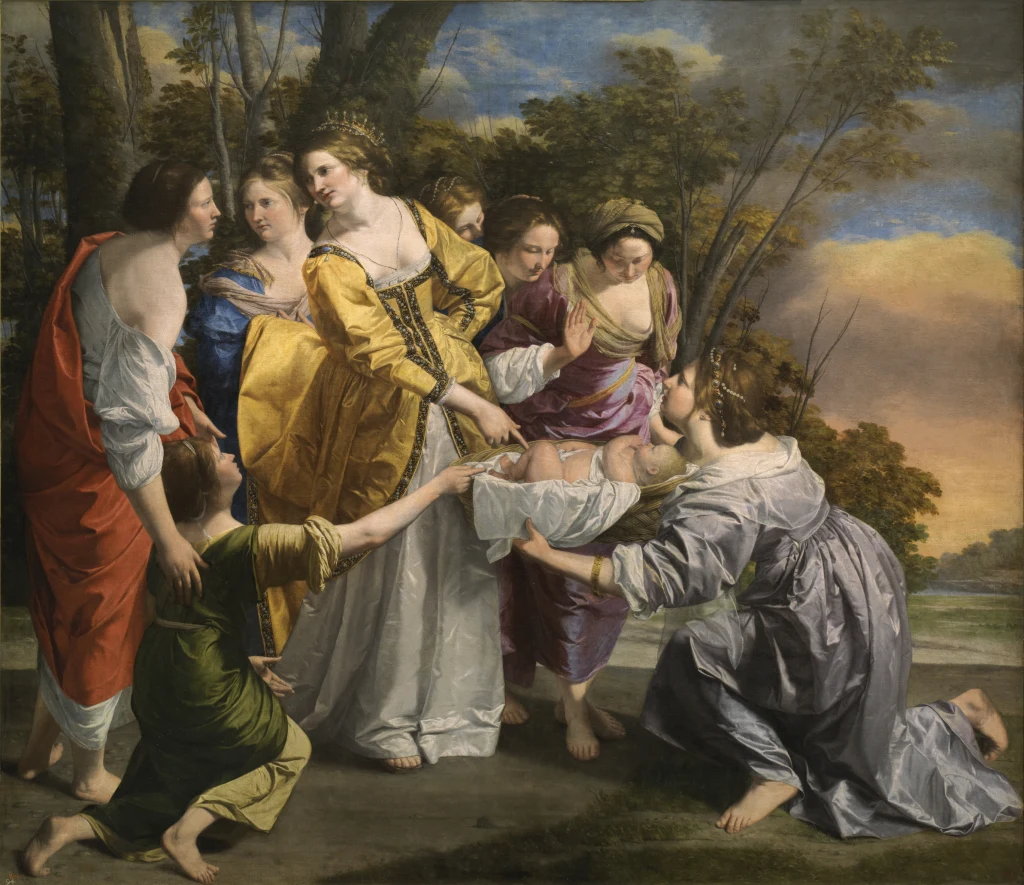
This was a diplomatic present. In the summer of 1633 Gentileschi, nearly 70 and working in London as painter to Charles I, sent it to Madrid for Philip IV, the most demanding collector in Europe at the time. His son Francesco carried it there himself. That October the English ambassador Arthur Hopton reported back that the king was pleased and had ordered it hung in the new hall of the Alcázar palace, among the best pictures he owned. Philip paid 900 ducats for a gift. The subject is the moment in Exodus when Pharaoh's daughter, bathing at the Nile, finds the baby her father had ordered drowned, and the child's sister Miriam steps forward to offer her own mother as a wet nurse. Apart from Moses, everyone in the painting is a woman, and they are dressed in heavy silks and satins that would have suited either court. Gentileschi had painted the scene once before, larger, for Charles I's queen in London. In this second version he reduced the nudity, pulled the group tighter together, and put dawn light behind them on the river.