Peter Paul Rubens · PD
The Immaculate Conception
Details
The story
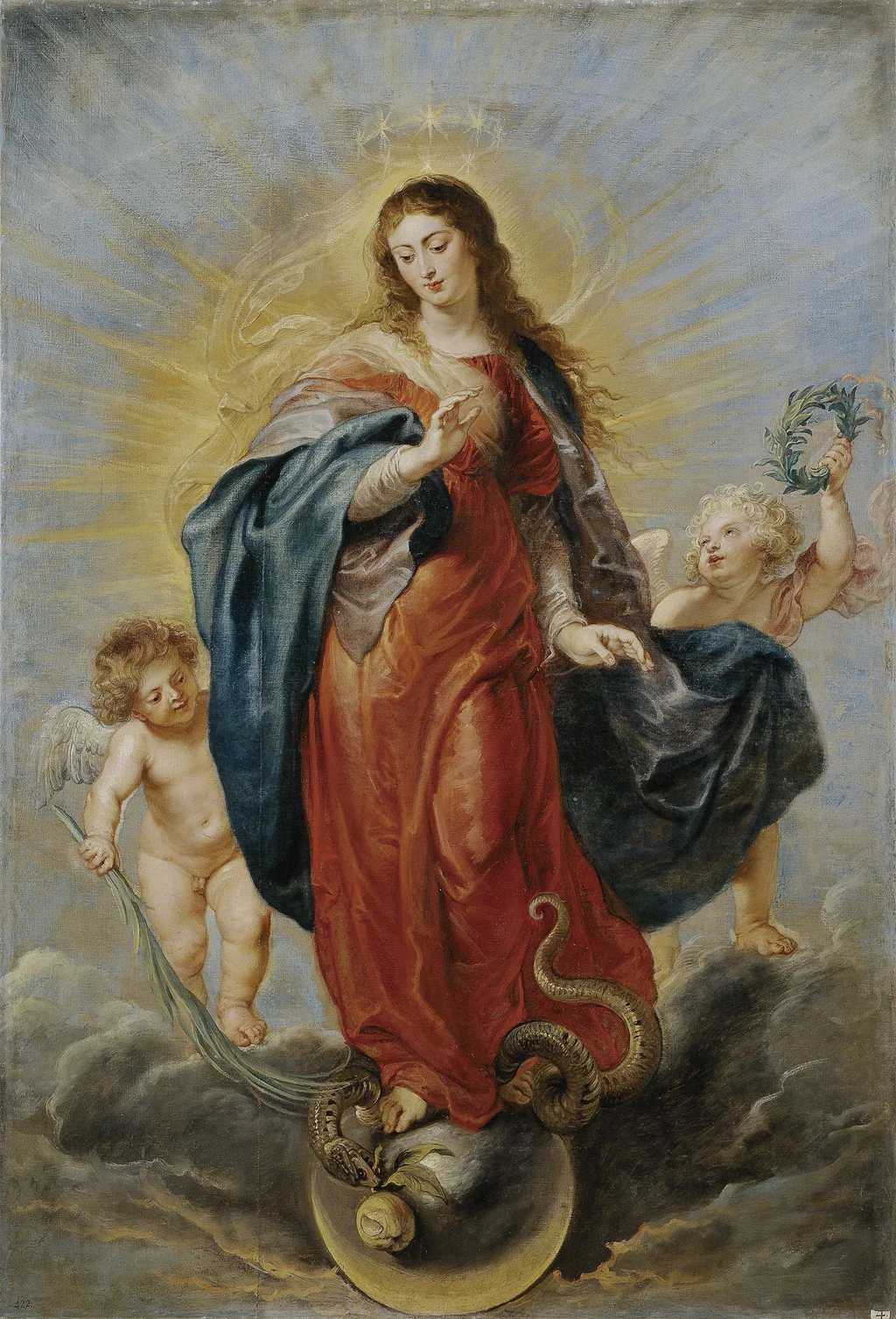
Rubens spent about eight months in Madrid across 1628 and 1629, and this canvas is one of the things he made while he was there. It was painted for the Marquis of Leganés, a soldier and politician with long connections to Flanders, who handed it straight to Philip IV. The king did not hang it in a gallery. It went into his private oratory in the cool ground-floor rooms of the old Alcázar palace, where the 1636 inventory records it as the altarpiece of that little room, and describes what the clerk saw: the Virgin standing on the globe with her foot on the serpent, an apple in its mouth, an angel to one side with a palm and another holding up a laurel crown. The picture then had an arched top, the shape an altar painting usually took. At some point it was made rectangular, possibly on the initiative of Velázquez, who was arranging the royal pictures. It hung at the Escorial monastery from the 1660s until 1837, when it came to the museum.