The Last Judgement
Details
The story
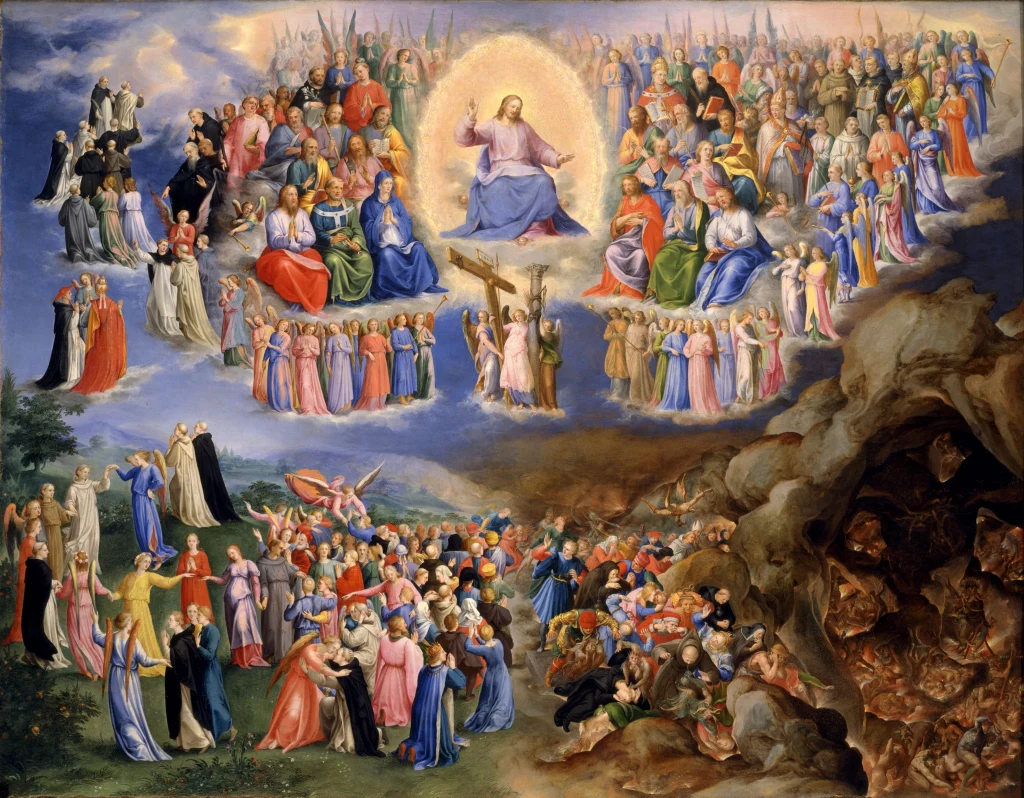
When Bartholomeus Spranger painted this, in Rome around 1570 and 1571, it was only seven years since the Council of Trent had ruled, in 1563, that sacred images must avoid anything indecent. Draperies had already been painted over several of the nudes in Michelangelo's Last Judgement in the Sistine Chapel. Spranger's patron was Pope Pius V, a Dominican friar before his election, and the picture was meant for Santa Croce, the Dominican convent the pope founded in his birthplace, Bosco Marengo in Piedmont.
Spranger's model was older, and Dominican too. He followed the Last Judgement painted in Florence in the 1420s by the friar Fra Angelico, now in the Museum of San Marco, and kept its plan of Christ the judge above, a double row of open tombs, the blessed led off to the left and the damned driven into hell on the right. Among the saved, on the left, is Pius V himself, in the red cap and red velvet cape of his official portraits.
The picture is painted in oil on copper. Where Fra Angelico laid on gold leaf, Spranger used a yellow pigment instead, as recent scientific analyses showed. Early in 2026 the two pictures hung side by side in Turin for the first time.