The Last Supper
Details
The story
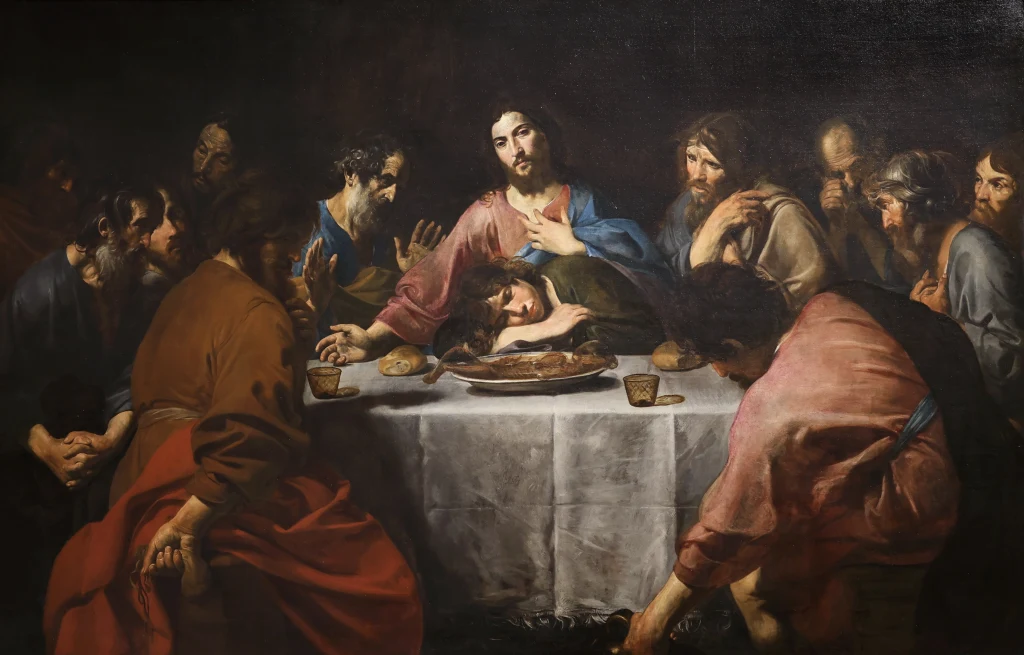
The marquis Asdrubale Mattei ordered this Last Supper from Valentin for his palace in Rome, and the museum sees the commission as a decisive step in the Frenchman's rise in the city. The picture is dated to 1625 or 1626.
Valentin keeps to the long horizontal format that tradition expected, with the apostles balanced on either side of the table and Christ exactly on its centre line. The fold running down the tablecloth forms a cross, and the museum reads that as deliberate. The front of the table is left open, which brings the viewer close to Christ. In the museum's reading this creates a private bond between the two who know who the traitor is, Christ by divine foresight and the viewer from that privileged place.
The canvas stayed with the Mattei until 1808. It then belonged to Cardinal Joseph Fesch, Napoleon's uncle, who gathered an enormous collection of paintings in Rome. After his estate was sold in 1845 it went to the Monte di Pietà, the city's papal pawn bank, and in 1895 it was bought for the national gallery.