The Leader of the Sacrifice
Details
The story
Around 1780 BC Mari, on the middle Euphrates, was ruled from outside. Shamshi-Adad, an Amorite king based in northern Mesopotamia, had taken the city and set up his son Yasmah-Addu there as king. The Louvre dates this wall painting to those years, which would mean it was made before Zimri-Lim, whose name the palace carries today, came to the throne around 1775.
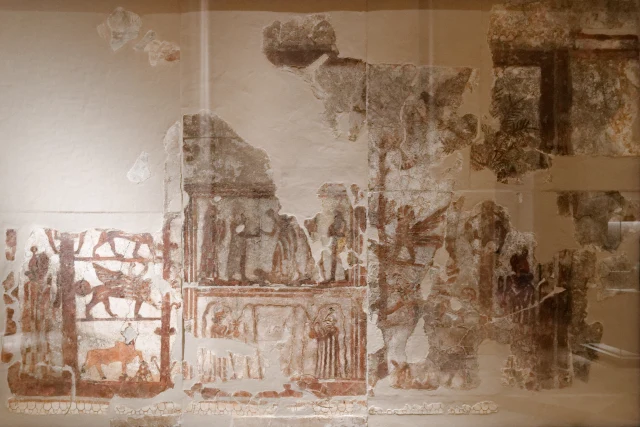
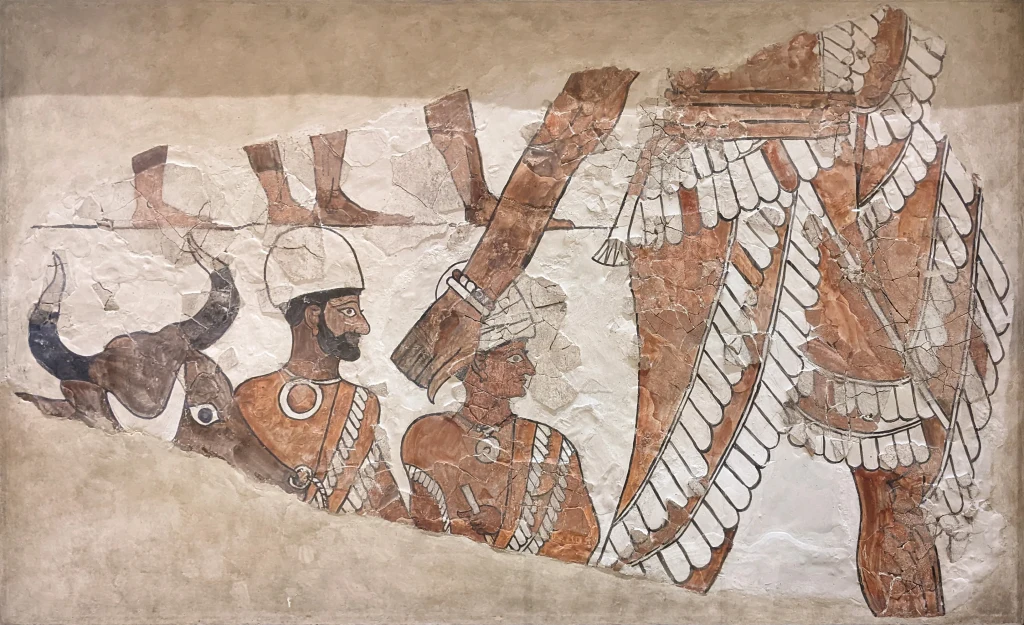
The fragment was painted high on the south wall of the palace's great courtyard, the same wall as the Investiture of Zimri-Lim. It belonged to a sacrifice scene laid out in three bands. The towering figure at the right, of whom mostly a layered, fringed robe survives, is the king, tall enough to fill two bands at once. Beside him, much smaller men lead a bull with dark curved horns to the sacrifice, and above their heads a row of bare feet is all that remains of the band higher up.