The Muse Thalia
Details
The story
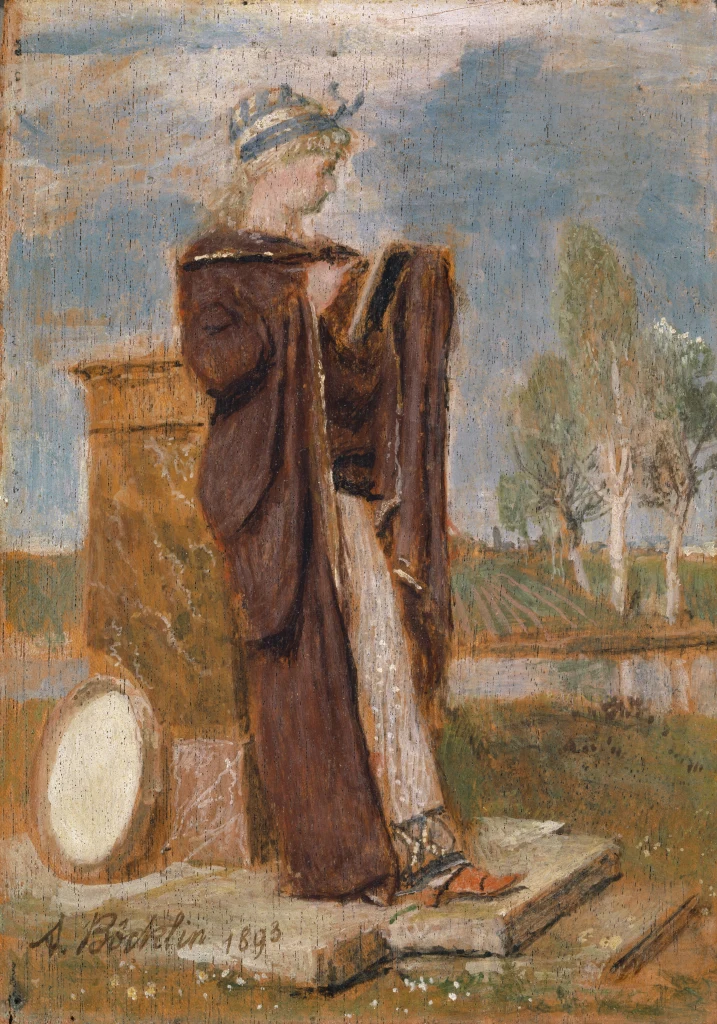
The museum lists this figure as Thalia, the muse of comedy, yet the flute she raises in both hands is the instrument that traditionally belongs to Euterpe, the muse of music and lyric verse, which is why the picture also travels under the name the Muse of Anacreon. The model was Böcklin's grown daughter Clara, who by 1893 was a young woman rather than the child he had painted years before. He set her against a dark ground and lit the red of her hair, lifting a face he knew from the household into an idealized figure out of Greek poetry. Anacreon, whose name clings to the picture, was a Greek poet of the 6th century BC remembered for verses on wine and love, and that double flute is the note Böcklin uses to place her in his old world.