The Peasants' Meal
Details
The story
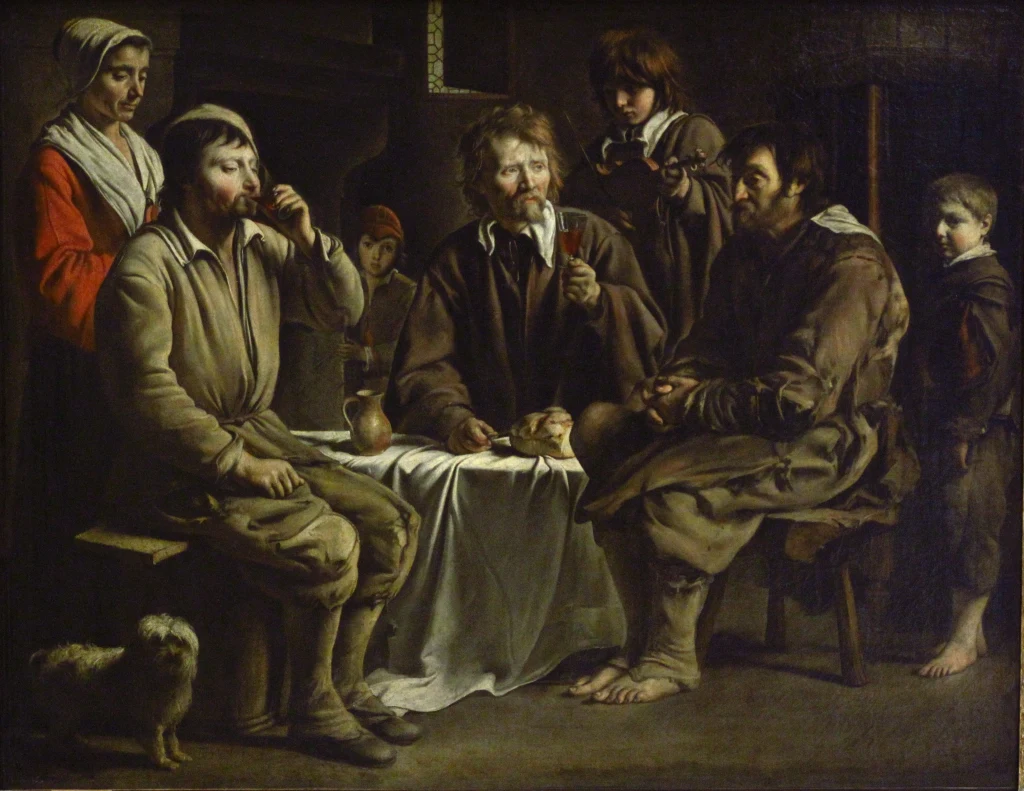
When this canvas first went on public show, at an exhibition in Paris in 1860, the critic Théophile Thoré, the man who brought Vermeer back to attention, wrote that it ought to be called Hospitality. To him the bread and red wine shared at a white tablecloth looked like a quiet act of charity, almost a Last Supper among poor men. It has since been read as a Protestant communion, a Jansenist vision and a scene of Catholic devotion. The Louvre, which has owned it since 1869, declines to choose between them.
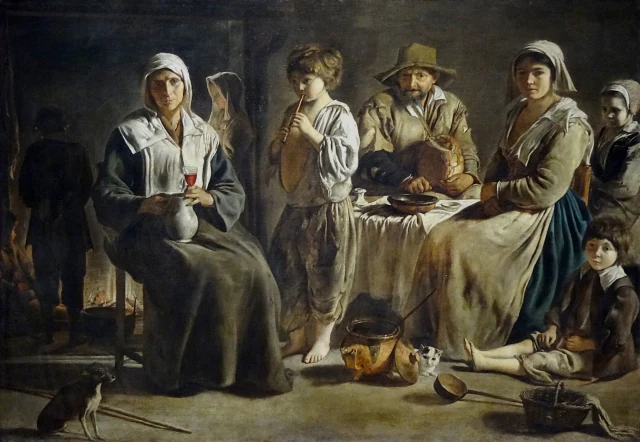
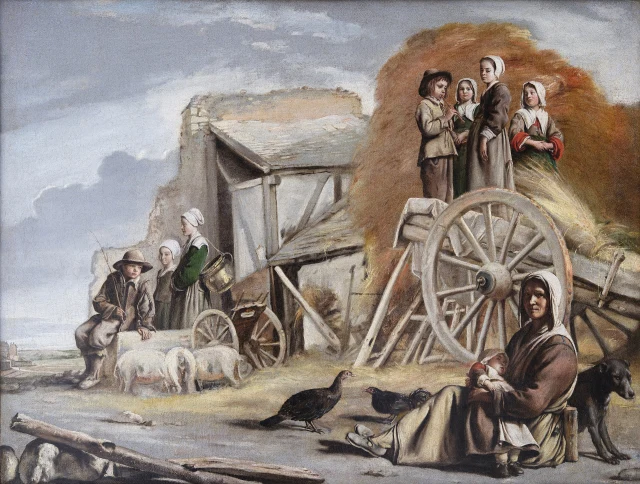
Whose hand it is also stays open. The picture is signed Lenain and dated 1642, the family name only, and the museum catalogues it under Louis, with his brother Antoine added as a possible collaborator and a question mark. On the meaning, the museum points to workshop habits rather than a hidden message. The woman at the left reappears in another Le Nain canvas in the museum, The Cart, and fine stemmed glasses stand beside a rough earthenware jug, objects that would hardly share one room. The small shaggy dog at lower left is probably a Bolognese, a lap dog kept by well-off women.