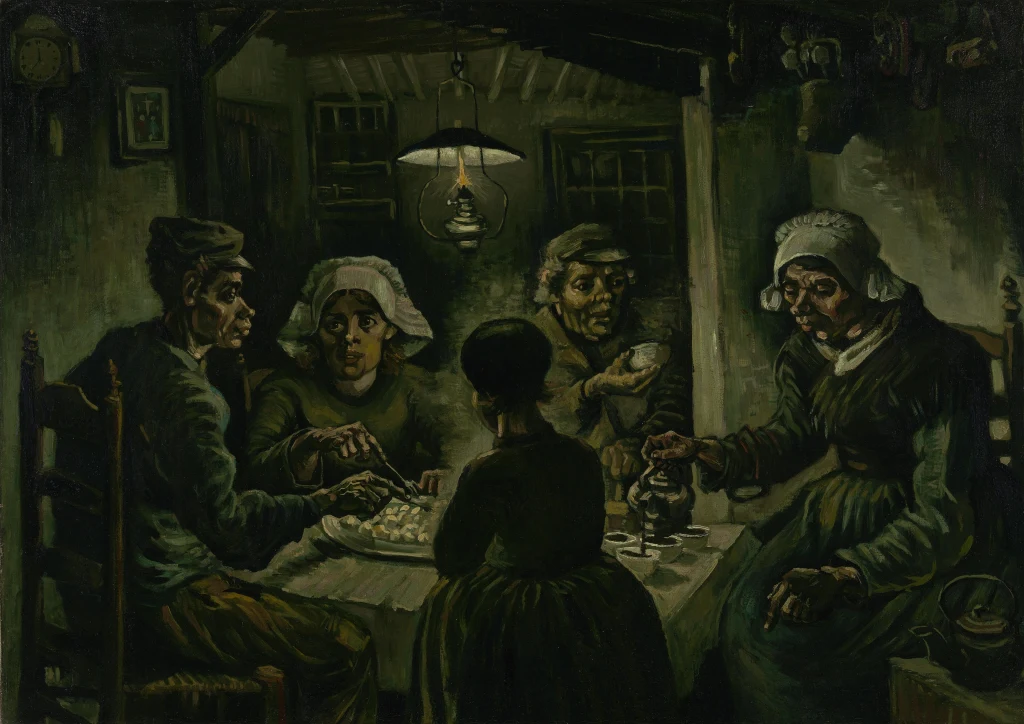
Vincent van Gogh, The Potato Eaters, 1885. Wikimedia Commons. · PD
The Potato Eaters
Details
The story
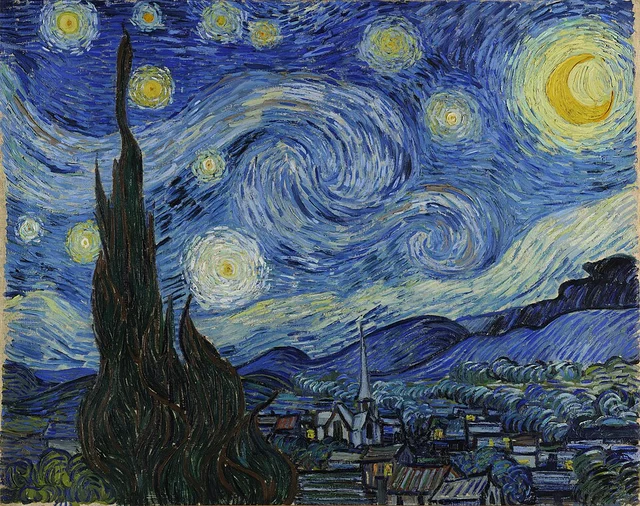
This comes years before the sunflowers and the starry skies most people picture. Van Gogh painted it in the spring of 1885 in Nuenen, a village in the Dutch south where his father was the pastor. He had only been painting for a few years and had never seen the bright light of the south of France. What he wanted was to show peasants honestly, and he chose the darkest, roughest way to do it. Five workers crowd around a small table under one hanging lamp, sharing a plate of potatoes and some coffee. He painted their faces the colour, as he put it, of a good dusty potato, unpeeled, and gave them heavy knotted hands. That was the whole idea. He wanted you to feel that the same hands now reaching for food had dug that food out of the earth, so the meal was honestly earned. He knew it looked coarse and meant it to. When he sent a version to his friend and fellow painter Anthon van Rappard, van Rappard wrote back that he could do better than this, which stung badly and helped end their friendship. Van Gogh disagreed for the rest of his life. Years later, in France, he still called this the best thing he had ever done.