Jean-Baptiste Camille Corot · CC0
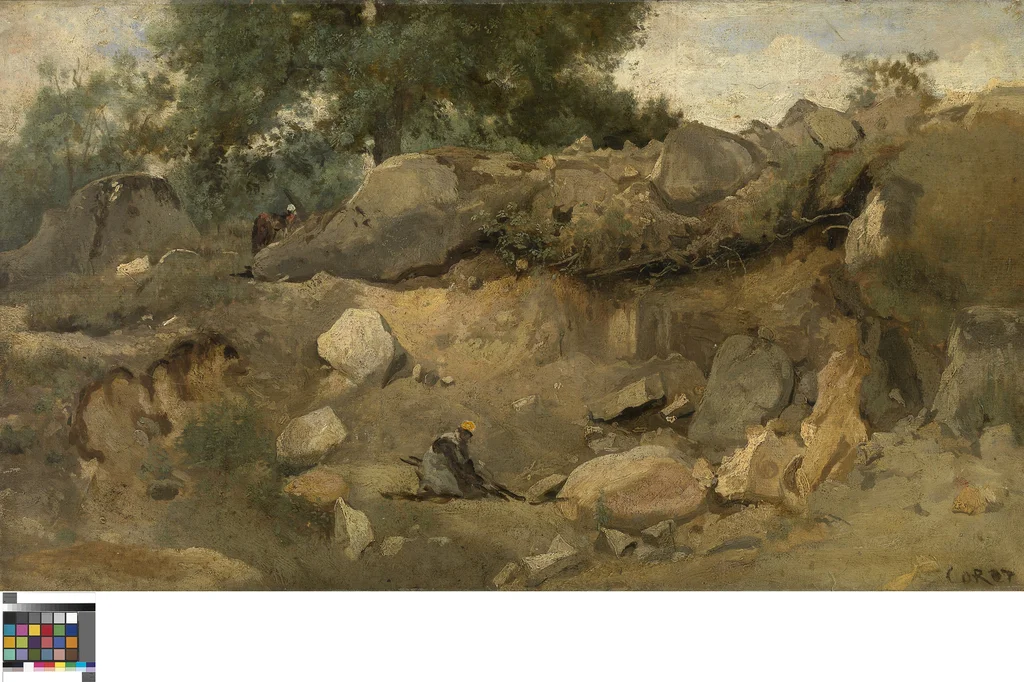
The Quarry of Chaise-Marie at Fontainebleau
Details
The story
In 1831 the sandstone quarries of the Forest of Fontainebleau were still producing around three million paving stones a year. Stone from this forest had been paving the streets of Paris since the 16th century, so the woods Corot walked into around 1830, as one of the first painters to work from the village of Barbizon on their edge, were a place of labour as much as of scenery. Here he chose one of the abandoned pits. Most of his open-air studies were raw material for large classical landscapes finished in the studio. This one was painted on the spot and meant to stand on its own. It is oil on paper, later mounted on canvas, and the museum's own description points to the way he holds the browns, beiges and greens together, with a few small figures at work among the blocks. The picture came to Ghent in 1913, left to the museum by the local collector Fernand Scribe.