Claude Monet · CC-BY-SA-4.0
The Rock Needle and the Porte d'Aval
Details
The story
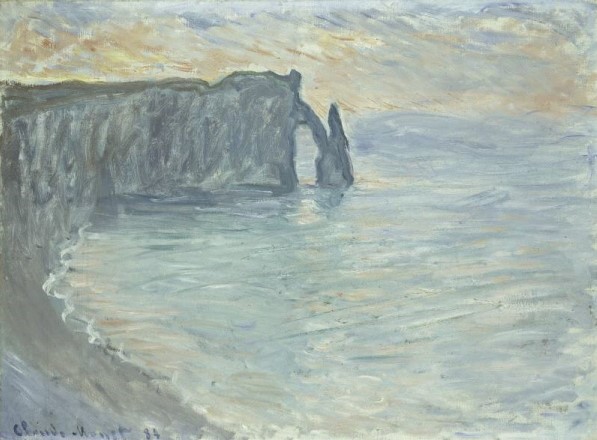
By the 1880s the chalk cliffs at Étretat, on the Normandy coast, were a fashionable stop. The railway had made the little fishing town easy to reach, and visitors came for exactly this view: the wide natural arch called the Porte d'Aval and the lone spike of rock beside it, the Aiguille, rising about 70 metres out of the sea. Monet had grown up along this coast and knew its moods. Across several autumns and winters he kept coming back to paint the formation, working low near the waterline where the light came off the wet chalk. One November day in 1885 a wave caught him there and threw him and his easel against the rocks, and afterwards he seemed more annoyed at the ruined canvas than shaken. The arch and the needle still stand off Étretat, and at low tide you can still walk out over the shingle to the beach where he set up.