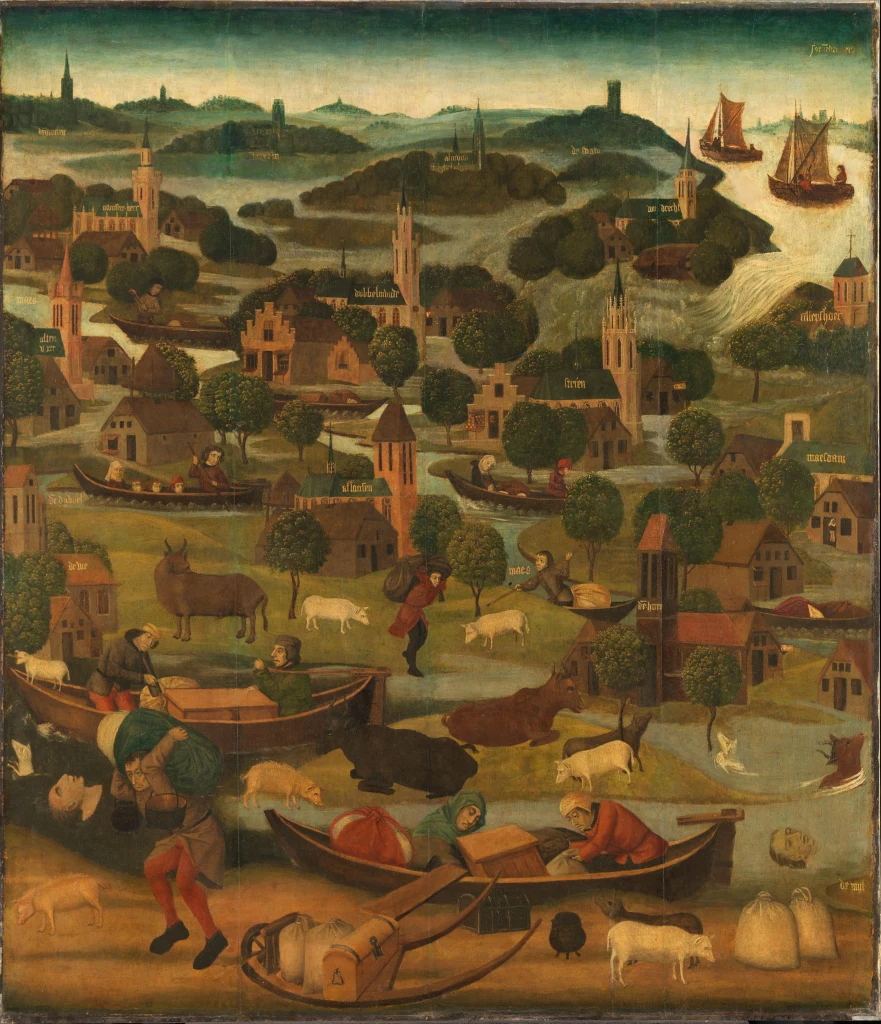
The Saint Elizabeth’s Day Flood
Details
The story
By the time this panel was painted, around 1490 to 1495, two generations had grown up beside the water that the Saint Elizabeth's Day Flood of 1421 left behind. The painter labelled the places in small letters beside their church towers, Dubbelmonde, Strijen, Maasdam, Puttershoek and others, strung along channels of water as if on a map. Some of these villages lay at the edge of the flood and still exist. Others, such as Dubbelmonde or Wieldrecht, were never rebuilt. Over the following decades their farmland turned into the creeks and reed beds of the Biesbosch. Closer to the viewer, the painting turns to the practical business of escape. People heave chests and sacks into boats. A man staggers under a bundle, cows and pigs crowd the last dry ground, and the heads of the drowned float in the water.