Pierre-Auguste Renoir · PD
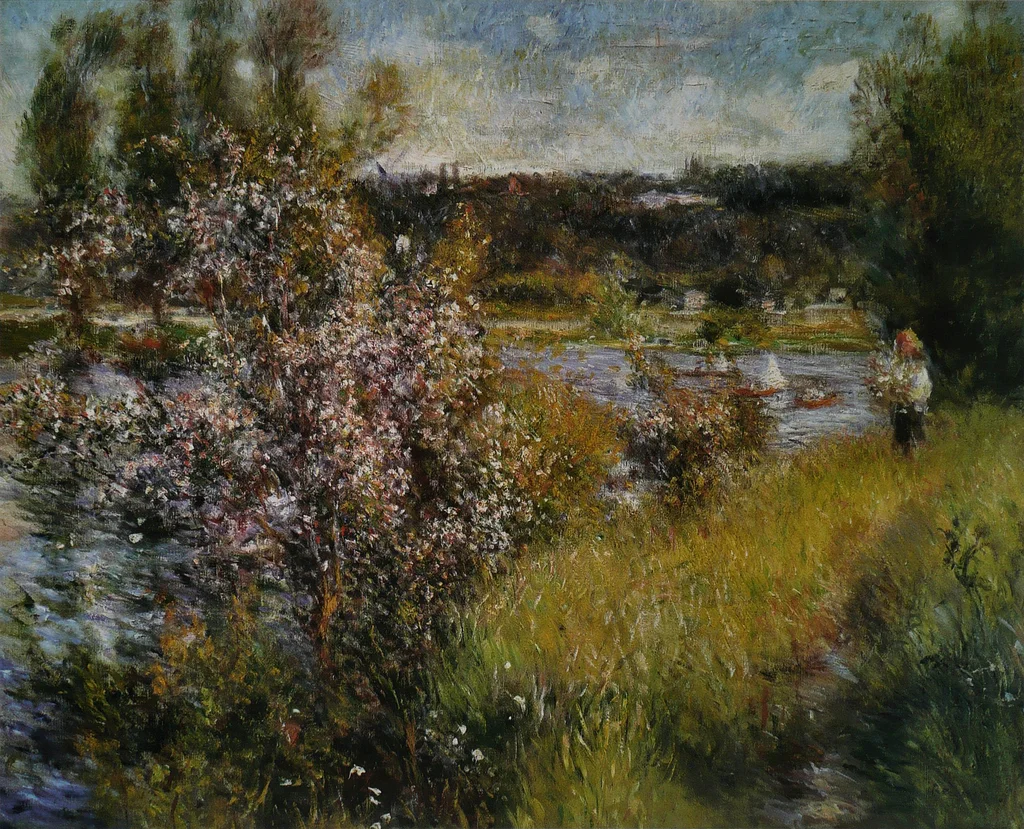
The Seine at Chatou
Details
The story
Behind the colours of this picture there may stand a chemist. Michel-Eugène Chevreul, who ran the dye works of the Gobelins tapestry factory in Paris, had published in 1839 his law of simultaneous contrast, the finding that two colours placed side by side change how each other looks. Curators at the Museum of Fine Arts think Renoir may have had it in mind in this spring view of the riverbank at Chatou, on the Seine west of Paris, which is built almost entirely from yellow-greens and lilacs, two tones that sharpen each other. Everything is broken into separate flicks of paint. Wisps of green and yellow send a breeze through the long grass, and a mass of white and pink flecks becomes a tree in flower. On the right a young girl is gathering flowers, painted with the same loose touches as the meadow, so that she almost dissolves into it. Renoir did not sell the canvas to Durand-Ruel until 1891. Arthur Brewster Emmons gave it to the museum in September 1919, three months before the painter died.