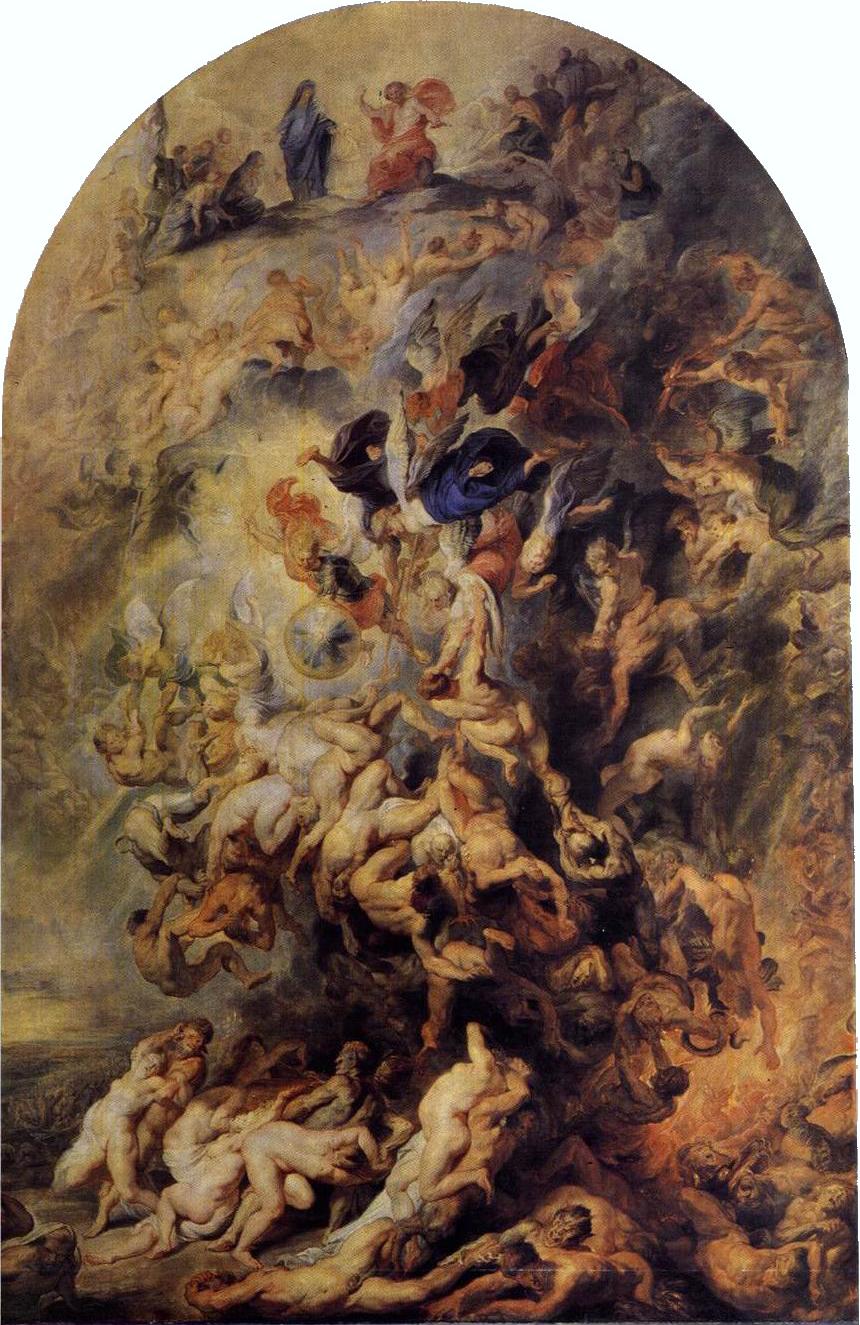
Peter Paul Rubens, The Small Last Judgement, 1619. Wikimedia Commons. · PD
The Small Last Judgement
Details
The story
This panel began as a different picture. The museum explains that Rubens first planned it as a Fall of the Damned, bodies tumbling down into darkness, and only later added the central motifs of a Last Judgement. The trumpeting angels give the change away, because they are painted on top of the first layer of paint. The museum dates the result to around 1621 or 1622, a few years after Rubens had delivered a huge Last Judgement for the Jesuit church at Neuburg on the Danube, which is why this one is called the Small Last Judgement, though at nearly two metres tall it is small only by comparison. Bodies rise toward the light on one side and fall into the dark on the other in one churning mass. The large Last Judgement is in Munich too.